Concrete Pool Deck Leveling Midlothian - Concrete Pool Deck Repair Midlothian - Concrete Pool Deck Raising Midlothian - Concrete Pool Deck Lifting Midlothian

Dallas Concrete Leveling: How Polyurethane Foam Repairs Sunken Slabs for Homes and Businesses

Dallas Concrete Leveling: How Polyurethane Foam Repairs Sunken Slabs for Homes and Businesses

If you own a home or business in Dallas, TX, you’ve likely seen the tell-tale signs of sunken concrete: uneven sidewalks, cracked driveways, or perhaps a patio that’s no longer level. These issues aren’t just an eyesore; they can create tripping hazards, lead to water drainage problems, and even impact your property’s value. Fortunately, there’s a modern, efficient, and cost-effective solution: polyurethane foam injection for concrete leveling. FoamWorks Concrete Leveling Dallas is at the forefront of this innovative technology, bringing lasting repairs to properties across the Dallas area.

For years, traditional methods like mudjacking were the go-to for raising sunken concrete. While effective to a degree, they often involved heavy equipment, messy slurries, and longer cure times. Today, polyurethane foam has revolutionized the industry, offering a superior alternative that’s faster, cleaner, and more durable. Let’s explore why this method is becoming the preferred choice for What is Concrete Raising & Why Use It in Dallas.

Understanding the Problem: Why Does Concrete Sink in Dallas?

Dallas’s unique soil composition, particularly its expansive clay soils, plays a significant role in concrete settlement. These soils can swell when wet and shrink when dry, leading to movement beneath concrete slabs. Other factors contributing to sunken concrete include:

  • Poor Soil Compaction: If the ground wasn’t properly compacted before the concrete was poured, it can settle over time, creating voids.
  • Erosion: Water runoff from rain or irrigation can wash away soil beneath slabs, leaving unsupported areas.
  • Tree Roots: Growing tree roots can push up or displace concrete, and when they decay, they can leave voids.
  • Heavy Loads: Over time, heavy vehicles or structures can cause concrete to settle, especially in high-traffic commercial areas or driveways.

Once voids form beneath a concrete slab, it loses its support, leading to cracking, tilting, and sinking. Addressing these issues promptly is crucial to prevent further damage and ensure safety.

The Polyurethane Foam Advantage for Dallas Concrete Leveling

Polyurethane foam injection offers distinct benefits over older methods, making it ideal for concrete repair in Dallas:

1. Lightweight Yet Strong

Unlike mudjacking slurries, which can add significant weight to already unstable soil, polyurethane foam is incredibly lightweight. It expands to fill voids, providing exceptional lift and support without overburdening the underlying soil. Despite its lightness, it boasts impressive compressive strength, capable of supporting heavy loads.

2. Minimal Disruption and Fast Cure Time

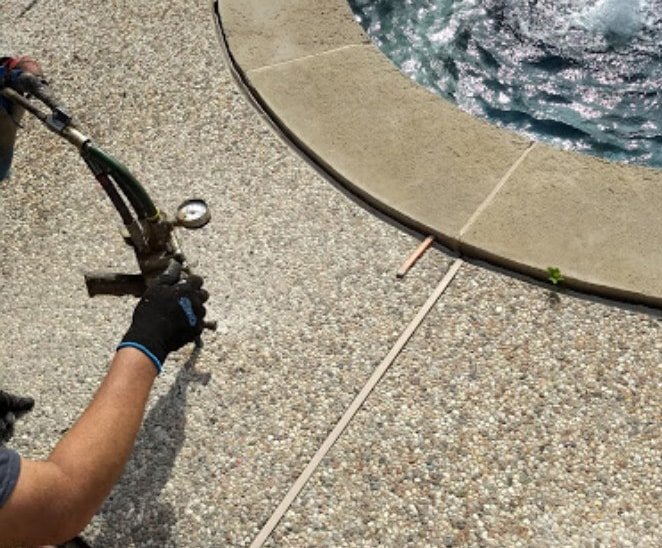
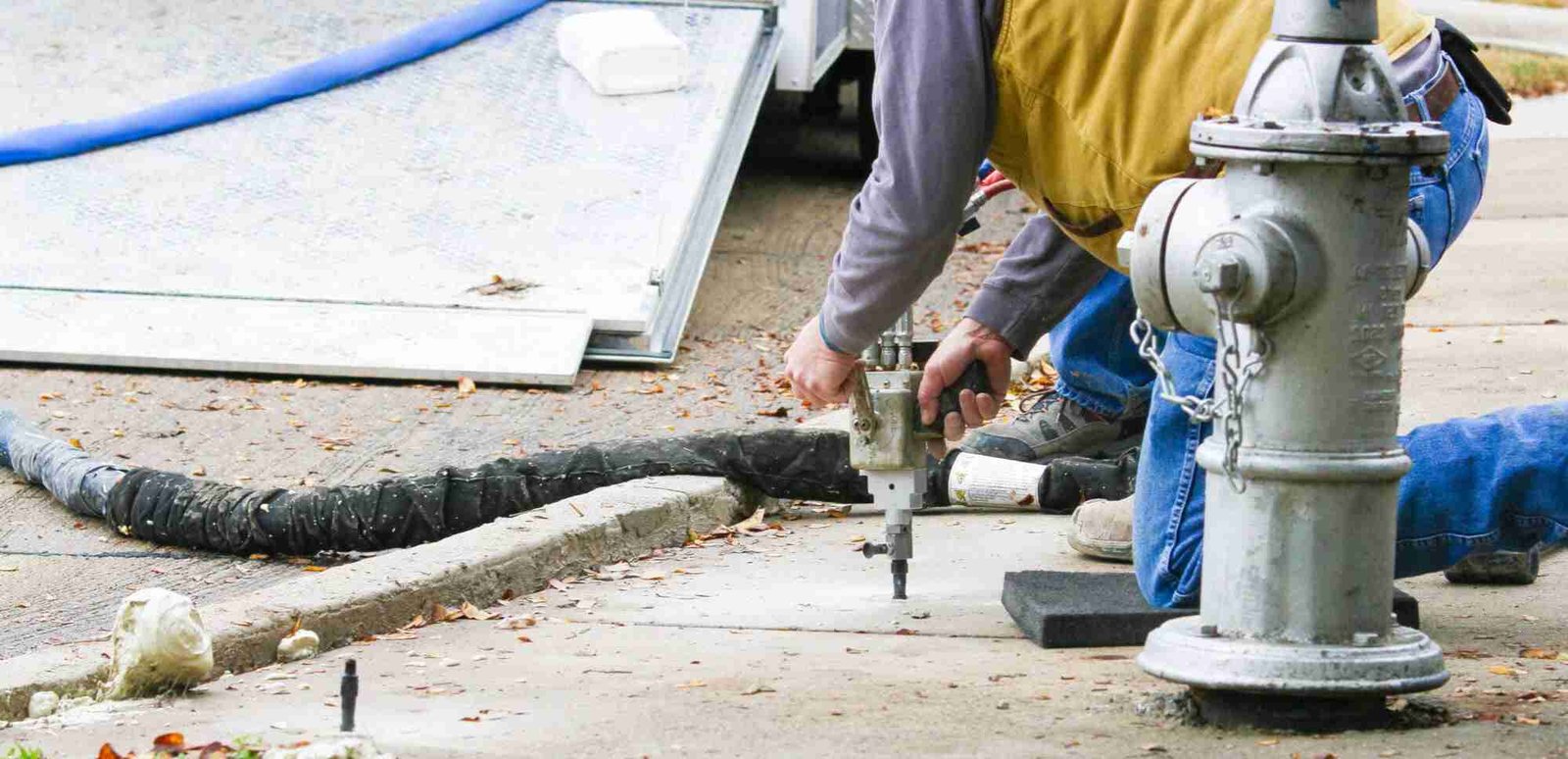
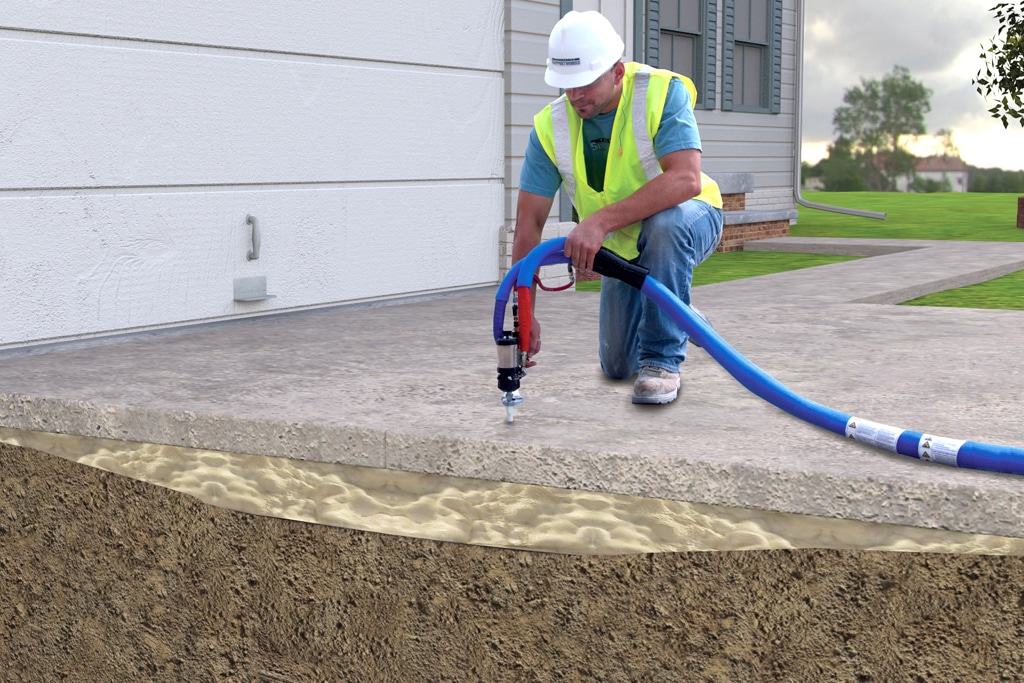
The injection process involves drilling small, penny-sized holes into the concrete. Through these holes, the liquid polyurethane foam is injected. It quickly expands, filling voids and gently lifting the slab back to its original position. The entire process is remarkably fast, often completed in hours, not days. Best of all, the foam cures rapidly, meaning the treated area can typically be used within minutes to hours after the repair, minimizing inconvenience for homeowners and businesses in Dallas.

3. Durability and Longevity

Polyurethane foam is hydrophobic, meaning it resists water. This is a significant advantage in Dallas where moisture can be a constant factor. It won’t break down or wash away, providing a long-lasting and stable foundation for your concrete. The foam adheres to the concrete and compacts the soil beneath, creating a stable, permanent repair.

4. Environmentally Friendly

Modern polyurethane foams are inert and do not leach harmful chemicals into the soil, making them an environmentally responsible choice for concrete repair.

5. Versatility

From residential sidewalks and driveways to large commercial slabs and loading docks, polyurethane foam is versatile enough to handle a wide range of concrete leveling projects. FoamWorks Concrete Leveling Dallas specializes in applying this technology to various surfaces, ensuring tailored solutions for every client.

How FoamWorks Concrete Leveling Dallas Performs Polyurethane Foam Injection

Our process is designed for efficiency, precision, and lasting results:

  1. Assessment: Our expert team begins with a thorough inspection of your sunken concrete to determine the extent of the damage and the underlying causes.
  2. Drilling: Small, strategically placed holes (typically 5/8 inch in diameter, about the size of a penny) are drilled through the concrete slab.
  3. Injection: A specialized two-part polyurethane foam is injected through these holes. The liquid foam immediately expands, filling any voids beneath the slab.
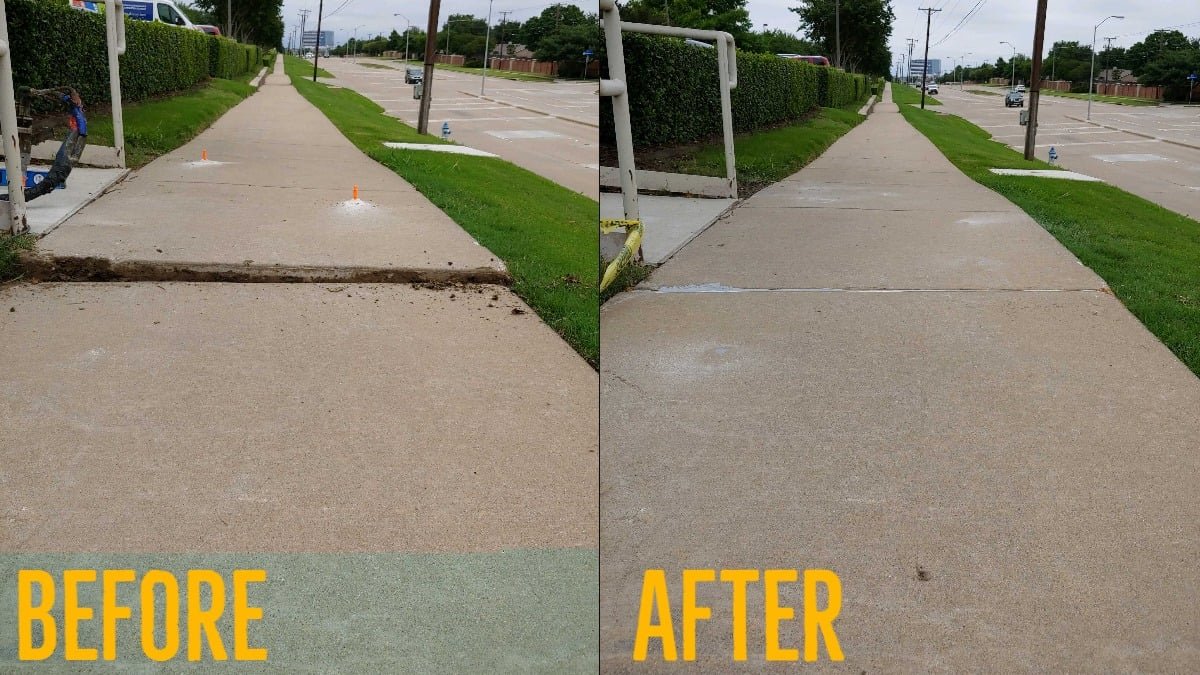
  4. Lifting: As the foam expands, it gently lifts the concrete slab back to its desired level. Our technicians carefully monitor the lift to ensure precision and accuracy.
  5. Finishing: Once the slab is level, the injection holes are patched, and the area is cleaned. The foam cures quickly, allowing for immediate use in most cases.

This method not only levels the concrete but also stabilizes the underlying soil, preventing future settlement. You can learn more about the advanced materials used in this process by visiting Poly foam concrete raising & concrete leveling.

Residential and Commercial Applications in Dallas

FoamWorks Concrete Leveling Dallas is equipped to handle both residential and commercial concrete leveling needs throughout the Dallas area. For homeowners, we address issues with:

  • Driveways: Eliminating trip hazards and improving curb appeal.
  • Sidewalks and Walkways: Ensuring safe passage around your property.
  • Patios and Pool Decks: Restoring level surfaces for outdoor enjoyment.
  • Garage Floors: Preventing further cracking and foundation issues.

Our Residential Concrete Leveling & Repair Services are designed to protect your investment and enhance the safety and aesthetics of your home.

For businesses in Dallas, maintaining safe and functional concrete surfaces is critical. We provide solutions for:

  • Warehouse Floors: Leveling uneven surfaces that can damage equipment and pose safety risks.
  • Loading Docks: Ensuring smooth transitions for forklifts and vehicles.
  • Parking Lots: Repairing sunken sections to improve safety and drainage.
  • Commercial Walkways: Creating accessible and hazard-free paths for customers and employees.

Whether you’re in the heart of downtown Dallas, the bustling areas of North Dallas, or the residential neighborhoods of East Dallas, our team understands the local challenges and delivers tailored solutions.

Choose the Local Experts for Your Dallas Concrete Leveling Needs

When it comes to something as important as your property’s concrete, you need a local expert you can trust. FoamWorks Concrete Leveling Dallas has a proven track record of delivering high-quality, durable concrete leveling solutions using state-of-the-art polyurethane foam technology. Our commitment to customer satisfaction and our deep understanding of Dallas’s specific environmental factors make us the premier choice for concrete repair.

Don’t let sunken concrete compromise the safety or appearance of your Dallas home or business any longer. Experience the FoamWorks difference with our efficient, clean, and long-lasting polyurethane foam injection services. We provide solutions that are a fraction of the cost of replacement, saving you time, money, and hassle.

Ready to restore your concrete surfaces? Contact FoamWorks Concrete Leveling Dallas today for a free estimate and discover how our advanced polyurethane foam solutions can bring your concrete back to life. Call us or visit our website to schedule your consultation!

Concrete Sidewalk Raising Midlothian - Concrete Sidewalk Leveling Midlothian - Concrete Sidewalk Lifting Midlothian - Concrete Sidewalk Repair Midlothian

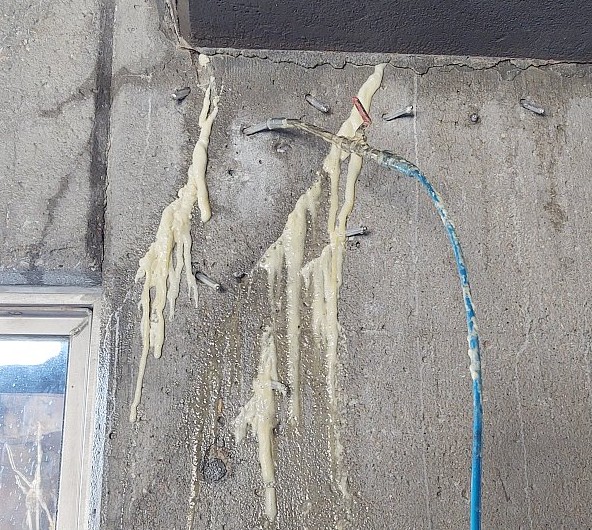
Polyurethane Foam Injection for Leaking Concrete Foundation Walls in Dallas: A Permanent Solution

Polyurethane Foam Injection for Leaking Concrete Foundation Walls in Dallas: A Permanent Solution

Are you dealing with the frustrating problem of water leaking through concrete foundation walls in Dallas? The good news is that polyurethane foam injection offers a highly effective and permanent solution to seal these leaks, preventing further water intrusion and protecting your home or business. This innovative method targets the cracks and voids in your foundation, expanding to fill them completely and create a watertight barrier.

Why Are Your Foundation Walls Leaking in Dallas?

Leaking foundation walls are a common issue for many property owners in Dallas, often stemming from a combination of factors:

  • Hydrostatic Pressure: Heavy rains, common in North Texas, can saturate the soil around your foundation. This creates hydrostatic pressure that pushes water against your concrete walls, forcing it through any existing cracks or porous areas.
  • Concrete Cracks: Over time, concrete can develop hairline cracks or larger fissures due to soil settlement, freeze-thaw cycles, or the natural curing process. These cracks are direct pathways for water to enter your basement or crawl space.
  • Poor Drainage: Inadequate exterior drainage, such as improperly sloped landscaping or clogged gutters, can direct water towards your foundation rather than away from it, exacerbating leakage problems.
  • Porous Concrete: While concrete is generally durable, it can be porous, allowing water to seep through if not properly sealed or if it has deteriorated over time.

How Does Polyurethane Foam Stop Foundation Leaks?

Polyurethane foam injection is a precise and powerful technique for addressing foundation leaks. Here’s a step-by-step look at how FoamWorks Concrete Leveling Dallas effectively uses this method:

  1. Assessment: Our experts first identify the exact location and nature of the leaks, whether they are active (currently seeping water) or passive (dry cracks that could leak in the future).
  2. Drilling Injection Ports: Small, strategically placed holes (injection ports) are drilled along the crack or leaky area in the concrete wall.
  3. Foam Injection: A specialized, high-density polyurethane resin is then injected into these ports. This resin is hydrophobic, meaning it repels water, and it reacts with any moisture present to expand rapidly.
  4. Crack Sealing and Void Filling: As the foam expands, it fills the entire crack, from the interior surface of the wall all the way through to the exterior soil. It also fills any surrounding voids, creating a complete and flexible seal. This expansion ensures that even microscopic pathways for water are blocked.
  5. Watertight Barrier: Once cured, the polyurethane foam forms a strong, yet flexible, watertight barrier that permanently seals the crack and prevents future water intrusion. This flexibility allows the foam to move slightly with the natural expansion and contraction of the concrete, ensuring long-term effectiveness.

This process is not only effective but also minimally invasive, often requiring no excavation, making it a preferred solution for homeowners and businesses alike.

The Benefits of Choosing Polyurethane Foam for Foundation Repair in Dallas

When considering solutions for a leaking foundation in Dallas, polyurethane foam injection stands out for several reasons: For more information, visit What is Concrete Raising & Why Use It, Polyurethane Foam vs Mudjacking and Poly foam concrete raising & concrete leveling.

  • Permanent Solution: Unlike temporary patches, polyurethane foam creates a lasting seal that addresses the root cause of the leak.
  • Watertight Seal: The expanding foam fills every crevice, ensuring a complete and impenetrable barrier against water.
  • Flexibility: The cured foam remains flexible, allowing it to withstand minor shifts in the foundation or soil without losing its seal.
  • Non-Invasive: The injection process typically requires minimal disruption to your property, as it’s done from the interior of the foundation wall.
  • Quick Curing Time: Polyurethane foam cures rapidly, often within minutes, allowing for immediate results and minimal downtime.
  • Eco-Friendly Options: Many polyurethane foams used today are environmentally inert once cured.

It’s important to understand the difference between various concrete repair methods. For example, while both address concrete issues, <a href=

Concrete Leveling Dallas - Concrete Raising Dallas - Concrete Lifting Dallas - FoamWorks Dallas Fort Worth

Polyurethane Foam Concrete Leveling: How Long Does It Last in Dallas, TX?

Polyurethane Foam Concrete Leveling: How Long Does It Last in Dallas, TX?

When considering concrete repair for sunken or settled slabs in Dallas, TX, one of the most common questions homeowners and business owners ask is about durability: What is the lifespan of polyurethane foam concrete leveling compared to traditional methods in Dallas? The direct answer is that high-quality polyurethane foam concrete leveling, when applied correctly by experienced professionals like FoamWorks Concrete Leveling Dallas, can last for many decades – often 10 to 20 years or even longer. This significantly surpasses the typical lifespan of traditional methods like mudjacking, which often requires re-treatment sooner due to its heavier, less stable material.

Polyurethane foam injection offers a robust, long-term solution for concrete leveling because it addresses the root causes of settlement with a lightweight, durable, and water-resistant material. Unlike older methods, polyfoam doesn’t add significant weight to the soil, nor does it degrade when exposed to moisture, making it ideal for the varied soil conditions and occasional heavy rains we experience in the Dallas area.

Understanding Polyurethane Foam: The Modern Solution for Concrete Leveling

Before diving into lifespan specifics, it’s helpful to understand what polyurethane foam concrete leveling entails. This innovative process involves injecting a specialized, expanding foam beneath sunken concrete slabs. The foam expands rapidly, filling voids, compacting loose soil, and gently lifting the concrete back to its original, level position. It’s a precise, clean, and incredibly effective method for addressing issues with concrete sidewalks, driveways, patios, pool decks, and even slab foundations across Dallas and surrounding areas.

If you’re curious about the fundamentals of this process, we have a detailed guide that explains What is Concrete Raising & Why Use It, highlighting its many benefits for properties in Dallas.

Why Polyurethane Foam Offers Superior Longevity

Several key characteristics contribute to the extended lifespan of polyurethane foam concrete leveling:

  • Lightweight Material: Polyurethane foam is incredibly lightweight, typically weighing only 2-4 pounds per cubic foot. This is crucial because it doesn’t add significant load to the underlying soil, preventing future settlement caused by the repair material itself. Traditional methods, using heavy mud or concrete slurries, can actually exacerbate settlement over time due to the added weight.
  • High Compressive Strength: Despite its light weight, cured polyurethane foam possesses exceptional compressive strength, providing a stable and durable base for the concrete slab. It can withstand significant loads without breaking down.
  • Hydrophobic Properties: The foam used in concrete leveling is hydrophobic, meaning it repels water. This is a huge advantage in areas like Dallas where soil moisture can fluctuate. Water intrusion is a primary cause of soil erosion and concrete settlement. By creating a waterproof barrier and not degrading in the presence of water, the foam helps protect the underlying soil from future erosion.
  • Void Filling and Soil Stabilization: The expanding nature of the foam allows it to fill even the smallest voids beneath the slab and compact loose soil, providing a solid, stable foundation that resists future movement. This comprehensive approach to stabilization is key to long-term results.
  • Resistance to Decomposition: Unlike organic materials or some traditional fillers, polyurethane foam is inert and does not decompose or break down over time due to biological activity, chemicals, or environmental factors.

Comparing Lifespan: Polyurethane Foam vs. Traditional Methods

When evaluating concrete leveling options in Dallas, the lifespan comparison is often a deciding factor. Let’s look at how polyurethane foam stacks up against common alternatives:

Polyurethane Foam Concrete Leveling

As mentioned, polyurethane foam solutions typically last 10-20 years, often much longer. This longevity is due to its durable, lightweight, hydrophobic, and soil-stabilizing properties. The material itself is designed to be a permanent solution, and its effectiveness is primarily limited by extreme, unforeseen geological shifts or improper initial installation.

Mudjacking (Slabjacking)

Mudjacking involves pumping a heavy cement-based slurry beneath the concrete. While it can effectively raise slabs, its lifespan is generally shorter, often ranging from 2-5 years, sometimes up to 10 years in ideal conditions. The primary reasons for its shorter lifespan include:

  • Heavy Material: The mudjacking slurry is very heavy, adding significant weight to already compromised soil. This can lead to re-settlement over time.
  • Water Soluble: The cementitious slurry can erode or wash away if exposed to water, especially in areas with poor drainage or high water tables.
  • Larger Injection Holes: Mudjacking requires larger injection holes (typically 1-2 inches in diameter), which can be more noticeable and potentially weaken the slab.

For a more in-depth comparison of these two popular methods, you can read our detailed article on Polyurethane Foam vs Mudjacking.

Slab Replacement

Completely replacing a concrete slab is, of course, a permanent solution for the slab itself. However, if the underlying soil issues that caused the original settlement are not addressed, a new slab can also settle over time. Replacement is also significantly more expensive, disruptive, and time-consuming than leveling. It involves demolition, removal, new material, and curing time, costing a fraction of the cost of replacement to level with foam.

The materials used in modern concrete raising and leveling, such as those employed by FoamWorks Concrete Leveling Dallas, are engineered for long-term performance. You can learn more about the science behind these advanced materials at Poly foam concrete raising & concrete leveling.

Factors Influencing the Lifespan of Concrete Leveling

While polyurethane foam offers exceptional durability, several factors can influence the exact lifespan of any concrete leveling project in Dallas:

1. Soil Conditions

Dallas’s expansive clay soils are notorious for their shrink-swell potential, which is a primary cause of concrete settlement. Polyurethane foam is highly effective in these conditions because it fills voids and stabilizes the soil. However, extreme, unaddressed drainage issues or significant geological shifts can still impact long-term stability.

2. Drainage Around the Property

Proper drainage is paramount. If water consistently pools around the foundation or under slabs, it can eventually erode even stabilized soil. Ensuring gutters are clear, downspouts extend away from the foundation, and the ground slopes away from structures will significantly extend the life of any concrete repair.

3. Quality of Installation

The expertise of the contractor plays a critical role. Experienced professionals like FoamWorks Concrete Leveling Dallas understand the nuances of soil mechanics, foam injection techniques, and proper lift. Incorrect application can compromise the repair’s longevity.

4. Initial Slab Condition

While foam leveling can fix many issues, severely cracked or deteriorated slabs might benefit more from replacement or a combination of repairs. A professional assessment will determine the best course of action.

5. Ongoing Maintenance

While polyurethane foam is low maintenance, periodic inspections of your concrete and addressing any new drainage issues or heavy loads on the slab can help ensure its long-term stability.

Why Choose FoamWorks Concrete Leveling Dallas for Lasting Results?

At FoamWorks Concrete Leveling Dallas, we are committed to providing the most durable and effective concrete leveling solutions in the Dallas area. Our expertise in polyurethane foam injection means we deliver repairs that stand the test of time, giving you peace of mind and saving you money in the long run. We understand the unique challenges posed by Dallas’s climate and soil, and we tailor our solutions to ensure maximum longevity for your concrete surfaces.

Frequently Asked Questions About Polyurethane Foam Lifespan

Q: Is polyurethane foam environmentally friendly?

A: Modern polyurethane foams used in concrete leveling are inert, non-toxic once cured, and do not leach harmful chemicals into the soil. They are also made from recycled materials in some cases, making them a more environmentally conscious choice than some alternatives.

Q: Can polyurethane foam be used in all weather conditions in Dallas?

A: Polyurethane foam can be injected in a wide range of temperatures. While extreme cold can slow down the chemical reaction, experienced technicians can adjust the process to ensure proper curing and effectiveness in most Dallas weather conditions.

Q: How quickly can I use my concrete slab after polyurethane foam leveling?

A: One of the significant advantages of polyurethane foam is its rapid cure time. Most slabs can be returned to full service within minutes to a few hours after the injection process, minimizing disruption to your home or business in Dallas.

Q: Will the foam degrade over time if exposed to water?

A: No, the polyurethane foam used for concrete leveling is hydrophobic and does not degrade or wash away when exposed to water. This makes it an excellent choice for areas prone to moisture, providing a stable, long-lasting solution.

Q: Is polyurethane foam leveling more expensive than mudjacking?

A: While the initial cost of polyurethane foam leveling might sometimes be slightly higher than mudjacking, its significantly longer lifespan and superior stability often make it the more cost-effective solution in the long run, avoiding repeated repairs.

Ready for a Long-Lasting Concrete Solution in Dallas?

Don’t let sunken concrete detract from your property’s value or create tripping hazards. FoamWorks Concrete Leveling Dallas offers state-of-the-art polyurethane foam injection services designed to provide durable, long-lasting results for your home or business. Our team is ready to assess your needs and provide a tailored solution that will keep your concrete level for decades to come.

Contact FoamWorks Concrete Leveling Dallas today for a free consultation and discover the lasting benefits of polyurethane foam concrete leveling. Call us to schedule your appointment!

Concrete Leveling Dallas - Concrete Raising Dallas - Concrete Lifting Dallas - FoamWorks Dallas Fort Worth

Polyurethane vs. Mudjacking: Which Concrete Leveling Method is Best for Your Dallas Property?

Polyurethane vs. Mudjacking: Which Concrete Leveling Method is Best for Your Dallas Property?

When your concrete slabs in Dallas start to sink, crack, or become uneven, you’re faced with a choice: replacement or repair. For repair, the two most common methods for concrete leveling are polyurethane foam injection and traditional mudjacking. While both aim to raise and stabilize settled concrete, polyurethane foam injection is generally considered the superior, more modern, and longer-lasting solution for Dallas homeowners and businesses due to its lightweight nature, smaller injection holes, and greater durability, especially when compared to the older, more invasive mudjacking technique.

Living in Dallas, you’ve likely seen concrete issues firsthand. From driveways to patios, and even commercial slabs, settling concrete isn’t just an eyesore; it can be a tripping hazard and lead to further structural problems. Understanding the differences between these two primary concrete raising methods is crucial for making an informed decision for your property.

What is Mudjacking?

Mudjacking, also known as slabjacking or concrete jacking, is a long-standing method for raising settled concrete. The process involves drilling several 1-inch to 2-inch holes through the sunken concrete slab. A slurry mixture, typically composed of water, soil, cement, and other additives, is then pumped under high pressure through these holes. This slurry fills any voids beneath the slab and, as more material is pumped, creates hydraulic pressure that lifts the concrete back to its original level.

Pros of Mudjacking:

  • Established Method: It’s been around for decades, so many contractors are familiar with it.
  • Material Cost: The materials used in the slurry can sometimes be less expensive than polyurethane foam, though this doesn’t always translate to a lower overall project cost due to labor and equipment.

Cons of Mudjacking:

  • Heavy Load: The slurry is very heavy, adding significant weight to the soil beneath the slab. If the original soil couldn’t support the concrete, adding more weight can lead to future settlement.
  • Large Holes: The large injection holes (1-2 inches in diameter) are more noticeable and can compromise the aesthetic of the concrete surface.
  • Messy Process: The slurry can be messy to work with, potentially spilling onto surrounding areas.
  • Curing Time: Mudjacking slurry typically requires a longer curing time before the concrete can bear full weight, sometimes up to a few days.
  • Limited Application: It’s not ideal for all types of concrete issues or soil conditions, especially in areas prone to moisture.
  • Less Durable: The material can erode over time, especially with water exposure, leading to future settlement.

What is Polyurethane Foam Concrete Leveling?

Polyurethane foam injection is a state-of-the-art method that has revolutionized concrete raising. This process involves drilling much smaller, penny-sized holes (typically 5/8-inch) into the sunken concrete. A high-density, expanding polyurethane foam is then injected through these holes. The foam rapidly expands and hardens, filling voids, compacting the soil, and gently lifting the concrete slab to its desired position. This method is what FoamWorks Concrete Leveling Dallas specializes in, offering a modern, efficient, and durable solution for concrete problems across the Dallas area.

To learn more about this innovative process and its benefits, check out What is Concrete Raising & Why Use It.

Pros of Polyurethane Foam Injection:

  • Lightweight: The expanding foam is incredibly lightweight, adding minimal burden to the underlying soil. This significantly reduces the risk of future settlement caused by added weight.
  • Small Injection Holes: The tiny, nearly invisible injection holes (about the size of a penny) are far less noticeable than mudjacking holes, preserving the appearance of your concrete.
  • Fast Curing Time: Polyurethane foam cures rapidly, often allowing the concrete to be used within minutes to hours after the repair is complete. This means minimal disruption to your daily routine in Dallas.
  • Water Resistant: The foam is hydrophobic, meaning it repels water. This makes it an excellent choice for areas prone to moisture, as it won’t wash away or erode like mudjacking slurry. It also helps stabilize the sub-base and can fill voids that might otherwise collect water.
  • Strong and Durable: Once cured, the foam is incredibly strong and provides a stable, long-lasting foundation for your concrete slab. You can read more about the materials used in Poly foam concrete raising & concrete leveling.
  • Versatile Application: Polyurethane foam can be used for a wide range of applications, from residential sidewalks and driveways to large commercial slabs, warehouse floors, and even seawall stabilization.
  • Environmentally Friendly: Many polyurethane foams are made from recycled materials and are inert once cured, posing no threat to the environment.
  • Precision Lifting: The controlled expansion of the foam allows for highly precise lifting, ensuring the slab is raised evenly and accurately.

Cons of Polyurethane Foam Injection:

  • Cost: The material cost for polyurethane foam can be higher than mudjacking slurry. However, this is often offset by reduced labor, faster project completion, and the long-term durability, making it a more cost-effective solution in the long run.
  • Specialized Equipment: Requires specialized equipment and trained technicians, like those at FoamWorks Concrete Leveling Dallas, to ensure proper application.

Polyurethane Foam vs Mudjacking: A Direct Comparison for Dallas Properties

When evaluating Polyurethane Foam vs Mudjacking for your Dallas property, consider these key differences:

  • Hole Size: Polyurethane uses small, dime-sized holes (5/8-inch); Mudjacking uses large, golf ball-sized holes (1-2 inches).
  • Weight: Polyurethane foam is lightweight (2-4 lbs per cubic foot); Mudjacking slurry is heavy (100-120 lbs per cubic foot).
  • Curing Time: Polyurethane cures in minutes to hours; Mudjacking cures in 1-3 days.
  • Durability: Polyurethane is water-resistant and long-lasting; Mudjacking slurry can erode over time.
  • Precision: Polyurethane offers precise, controlled lifting; Mudjacking can be less predictable.
  • Mess: Polyurethane is a cleaner process; Mudjacking can be quite messy.
  • Cost-Effectiveness: While initial material cost might be higher for foam, its longevity, minimal disruption, and reduced risk of re-settlement often make it significantly more affordable than concrete replacement and a better long-term investment than mudjacking.

For most concrete leveling needs in Dallas, polyurethane foam injection offers a superior combination of efficiency, durability, and aesthetic appeal. It addresses the root cause of settlement without adding excessive weight, ensuring a stable and lasting repair.

Why Choose Polyurethane Foam for Your Dallas Concrete?

Dallas’s expansive clay soils are notorious for causing concrete settlement due to their tendency to swell when wet and shrink when dry. This constant movement creates voids beneath slabs. Polyurethane foam not only fills these voids but also compacts the loose soil, creating a more stable base. Its hydrophobic properties are particularly beneficial in our climate, preventing water from undermining the repair.

Whether it’s a sunken driveway, an uneven patio, or a rocking commercial slab, FoamWorks Concrete Leveling Dallas provides expert polyurethane foam injection services designed to withstand the unique challenges of our local environment.

Frequently Asked Questions About Concrete Leveling in Dallas

How long does polyurethane concrete leveling last?

When properly applied, polyurethane concrete leveling is a permanent solution. The foam is inert, won’t degrade, and is resistant to water, meaning it can last for decades, often for the lifetime of the concrete slab itself.

Is polyurethane foam safe for the environment?

Yes, the polyurethane foam used by reputable companies like FoamWorks is environmentally inert once cured. It doesn’t leach chemicals into the soil or groundwater, making it a safe choice for your property and the Dallas ecosystem.

Can polyurethane foam be used for all types of concrete?

Polyurethane foam is incredibly versatile and can be used to raise and stabilize almost any type of sunken concrete slab on grade, including sidewalks, driveways, patios, pool decks, garage floors, and even interior commercial slabs and foundations.

How much does concrete leveling cost in Dallas?

The cost of concrete leveling varies depending on the size of the area, the extent of the settlement, and the specific method used. While we can’t give exact figures without an inspection, polyurethane foam injection is typically a fraction of the cost of replacing concrete and a highly cost-effective long-term solution compared to mudjacking’s potential for future re-settlement.

How quickly can I use my concrete after polyurethane leveling?

One of the biggest advantages of polyurethane foam is its rapid cure time. Most residential slabs can be walked on immediately and driven on within 15-60 minutes after the repair is completed, minimizing disruption to your Dallas home or business.

Ready to Level Your Dallas Concrete?

Don’t let sunken concrete detract from your property’s value or create safety hazards. When considering polyurethane concrete leveling vs mudjacking in Dallas, the choice for a durable, efficient, and less invasive repair is clear. FoamWorks Concrete Leveling Dallas is your local expert, providing top-tier polyurethane foam injection services to restore your concrete surfaces quickly and effectively. Contact us today for a free consultation and see how we can help you achieve perfectly level concrete!

Concrete Leveling Dallas - Concrete Raising Dallas - Concrete Lifting Dallas - FoamWorks Dallas Fort Worth

Avoiding Pitfalls: Red Flags When Choosing a Concrete Leveling Company in Dallas

Avoiding Pitfalls: Red Flags When Choosing a Concrete Leveling Company in Dallas

When you notice your concrete slabs sinking or becoming uneven, it’s natural to seek a professional concrete leveling company in Dallas to restore their safety and appearance. However, not all companies are created equal, and choosing the wrong one can lead to wasted money, shoddy work, and ongoing frustration. So, what are the red flags to watch out for when hiring a concrete leveling company in Dallas? The most critical red flags include a lack of proper licensing and insurance, vague or evasive answers about their process, overly lowball bids that seem too good to be true, aggressive sales tactics, and a poor track record indicated by negative reviews or a lack of verifiable experience.

Understanding these warning signs can help you make an informed decision and ensure you partner with a reputable and effective service provider for your concrete repair needs. Let’s dive deeper into what to look for and, more importantly, what to avoid.

Lack of Proper Licensing and Insurance

One of the most significant red flags when evaluating a concrete leveling company is their inability or unwillingness to provide proof of proper licensing and insurance. In Dallas, and indeed across Texas, any legitimate contractor should be able to present these documents readily. Licensing ensures they meet state and local requirements for competence and ethical operation, while comprehensive insurance (liability and workers’ compensation) protects both their crew and your property in case of an accident.

What to look for: Ask for specific license numbers and insurance certificates. Don’t just take their word for it. A reputable company will be transparent and proud to show they operate legally and responsibly.

Vague or Evasive Answers About Their Process

A professional concrete leveling company should be able to clearly explain their methods, materials, and the expected outcome of the project. If a company gives you vague answers, avoids technical details, or seems to gloss over how they plan to address your specific problem, consider it a major red flag.

For instance, they should be able to articulate the benefits of their chosen method, such as polyurethane foam injection, and how it compares to other techniques. If you’re curious about what is concrete raising and why use it, a good contractor will walk you through the entire process, from assessment to completion. They should also be transparent about the materials they use, like the advanced Poly foam concrete raising & concrete leveling products that offer durable, long-lasting results.

Unclear Explanation of Materials and Techniques

Be wary if a company can’t differentiate between various concrete leveling techniques or if they push a single method without explaining why it’s the best fit for your situation. For example, understanding the differences between polyurethane foam vs mudjacking is crucial for making an informed decision about your concrete repair. A trustworthy company will explain why polyurethane foam is often superior for its lightweight, durable, and less invasive properties.

Overly Lowball Bids and Pressure Sales Tactics

While everyone wants a good deal, an estimate that is significantly lower than others you’ve received should raise a red flag. Extremely low bids often indicate a company might be cutting corners on materials, labor, or insurance, or they might add hidden fees later. Reputable concrete leveling companies provide fair, competitive pricing that reflects the quality of their work and materials.

Similarly, be cautious of high-pressure sales tactics. If a company tries to rush you into signing a contract on the spot, offers steep