Interior concrete raising financing - concrete floor leveling financing - warehouse floor leveling - commercial floor concrete raising and leveling financing

Commercial Warehouse Floor Leveling in Dallas, TX: Polyfoam Injection for Industrial Concrete

“`html

Commercial Warehouse Floor Leveling in Dallas, TX: Polyfoam Injection for Industrial Concrete

Commercial Warehouse Floor Leveling in Dallas, TX: Polyfoam Injection for Industrial Concrete

In the bustling industrial landscape of Dallas, TX, and its surrounding areas like Plano, Irving, Garland, Mesquite, Grand Prairie, and Fort Worth, commercial warehouses and manufacturing facilities are the backbone of countless businesses. These high-traffic environments rely heavily on stable, level concrete floors to ensure efficient operations, worker safety, and the longevity of equipment. However, over time, even the most robust concrete slabs can succumb to the challenges of soil settlement, erosion, and constant heavy loads, leading to uneven surfaces, voids, and troublesome rocking panels.

When your warehouse floor begins to show signs of sinking or instability, it’s not just an aesthetic issue; it’s a significant operational and safety concern. FoamWorks Concrete Leveling offers a cutting-edge, highly effective solution: polyurethane foam injection for commercial and industrial concrete leveling. This innovative method provides a durable, long-lasting fix that minimizes disruption and maximizes efficiency for your business.

The Costly Problem of Uneven Industrial Floors

Commercial and industrial facilities, particularly warehouses and distribution centers, place immense stress on their concrete floors. The constant movement of forklifts, heavy machinery, and pallet jacks, combined with the sheer weight of stored goods, can exacerbate underlying issues. Here’s how problems typically develop:

  • Soil Settlement: Over time, the soil beneath concrete slabs can compact, settle, or erode due to moisture changes, poor drainage, or natural ground movement. This creates empty spaces or voids beneath the concrete.
  • Heavy Traffic & Vibration: Continuous heavy loads and vibrations from machinery can cause concrete panels to shift, crack, and eventually sink into these voids.
  • Rocking Slabs: When a void forms under a concrete panel, the slab loses its uniform support. As forklifts or heavy equipment pass over it, the unsupported section can rock or teeter, leading to dangerous instability.
  • Cracking and Spalling: Uneven support increases stress on the concrete, leading to new cracks or worsening existing ones. This not only looks bad but can also create trip hazards and further structural degradation.
  • Operational Inefficiencies: Uneven floors slow down material handling, increase wear and tear on forklifts and equipment, and can even damage goods during transport.
  • Safety Hazards: Rocking slabs and trip hazards pose significant risks to employees, potentially leading to injuries and costly liability claims.

Ignoring these issues is not an option. The longer they persist, the more severe and expensive the repairs become. That’s why proactive commercial warehouse floor leveling in Dallas, TX is crucial.

FoamWorks’ Solution: Polyurethane Foam Injection for Commercial Concrete Leveling

FoamWorks Concrete Leveling specializes in resolving these complex industrial flooring problems with a state-of-the-art polyurethane foam injection system. This method is superior to traditional mudjacking or concrete replacement for several reasons:

How Polyurethane Foam Leveling Works

Our process is remarkably efficient and minimally invasive:

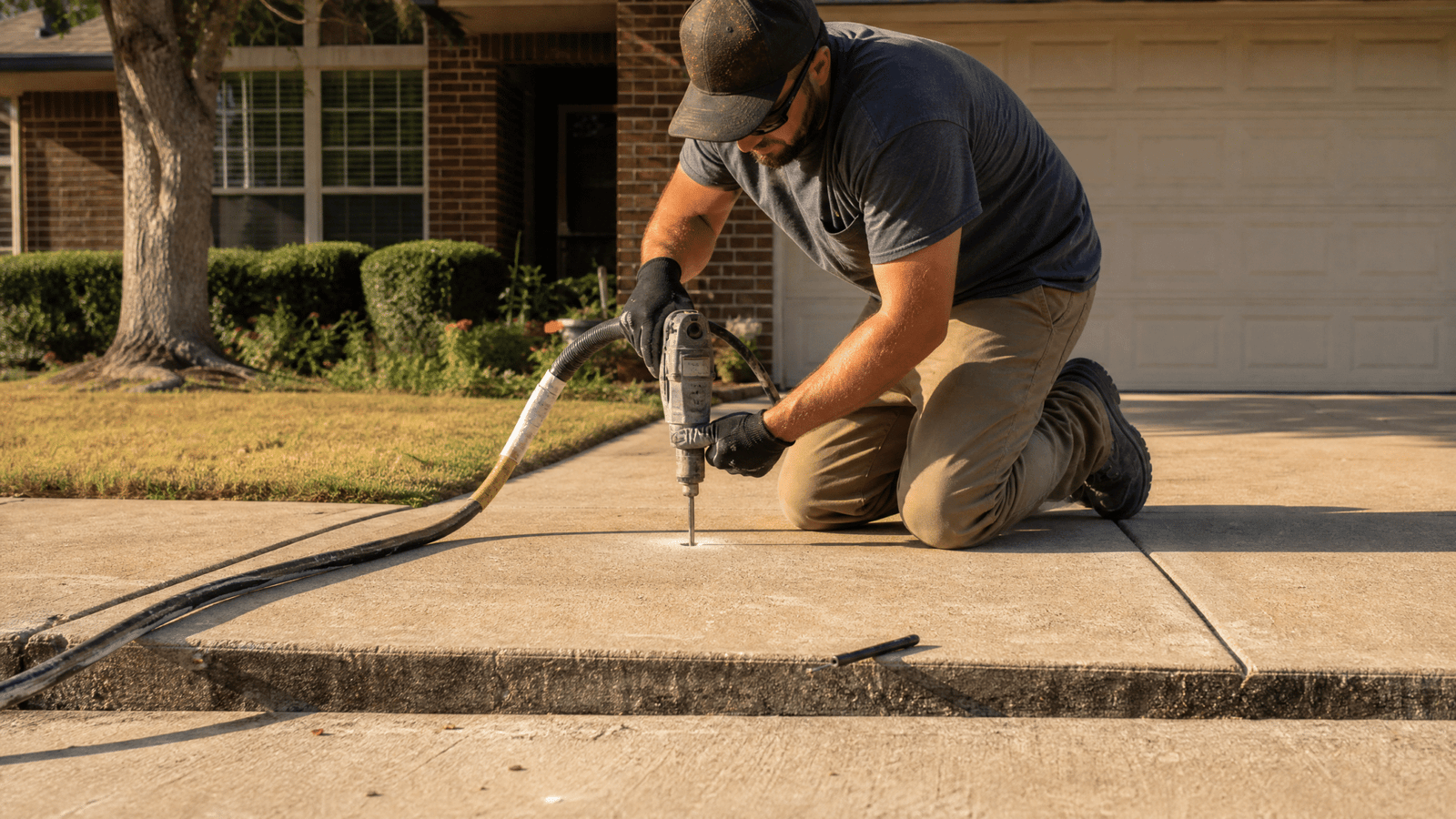
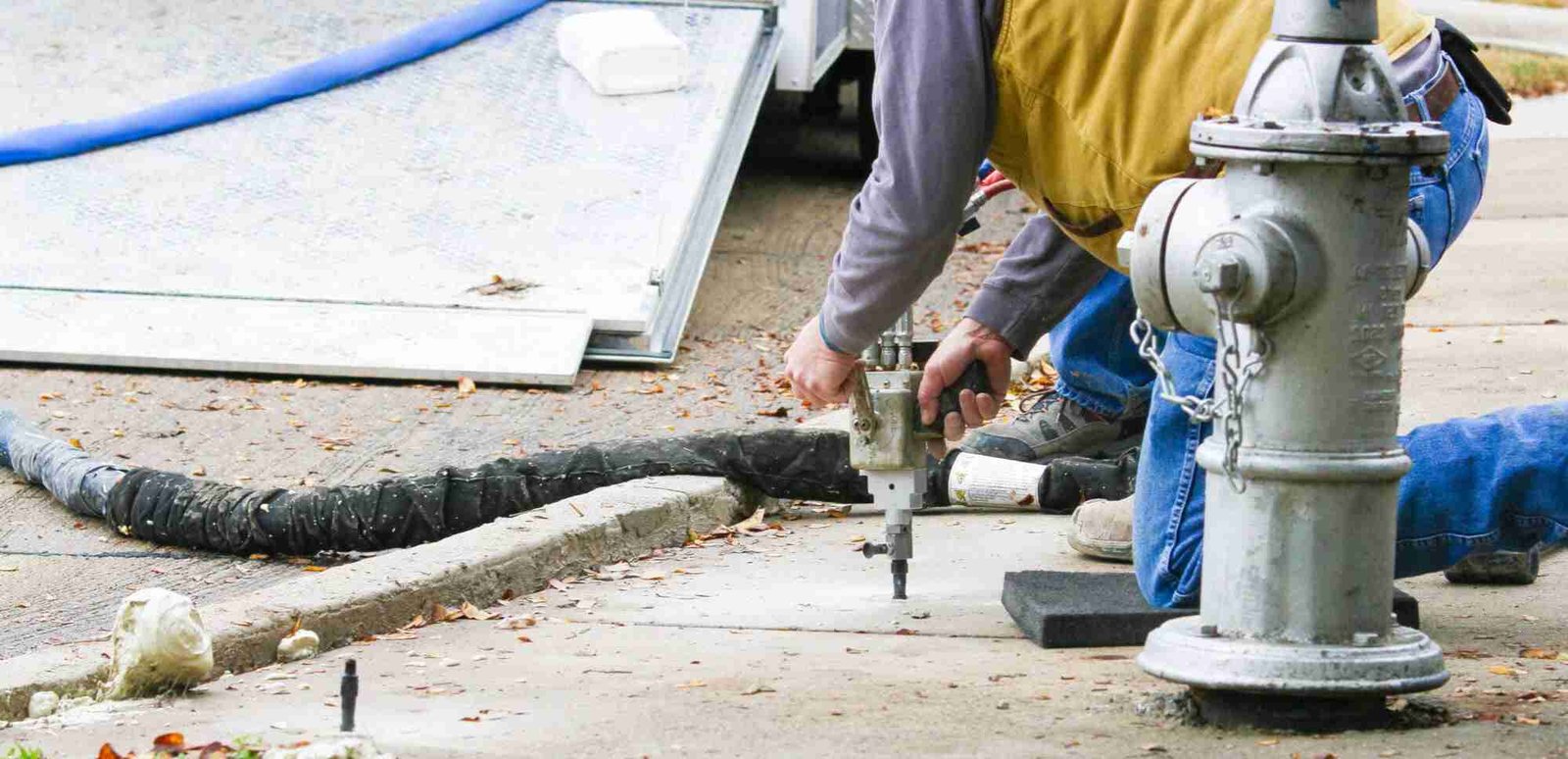
  1. Small Port Holes: Our expert technicians drill tiny, 3/8-inch diameter holes (about the size of a dime) strategically across the sunken or unstable concrete slab. These small holes ensure minimal impact on your floor’s surface.
  2. Precision Injection: A high-density, expanding polyurethane foam is then injected through these port holes. This specialized foam is engineered to expand rapidly upon injection.
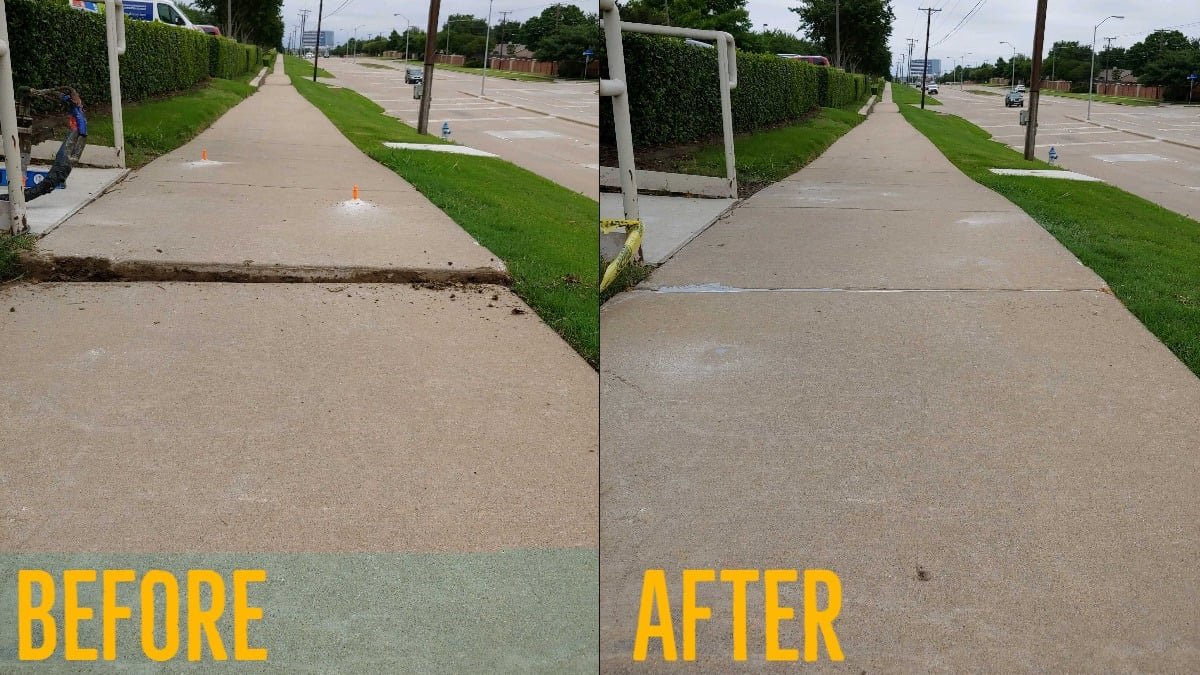
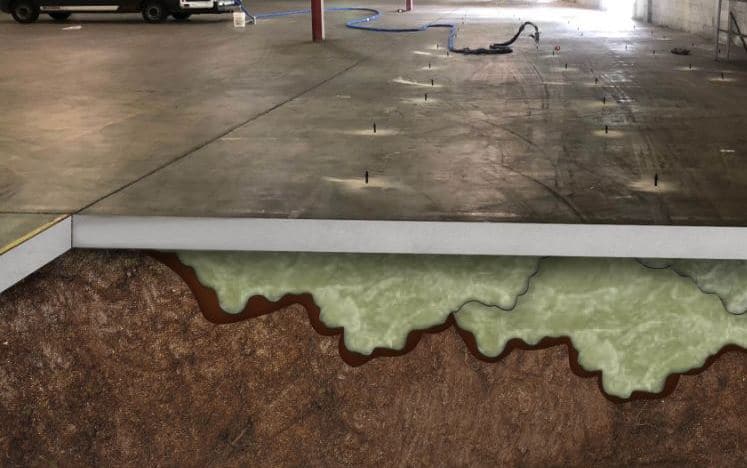
  3. Void Filling & Lifting: As the foam expands, it flows into every void, crack, and gap beneath the concrete slab, completely filling the empty spaces. This creates a solid, stable foundation. The controlled expansion then gently lifts the concrete slab back to its original, level position. Imagine a cutaway view: you’d see a distinct, cream/green layer of dense foam snugly filling the space between the bottom of your concrete slab and the underlying soil, providing unparalleled support.
  4. Curing & Hardening: The foam cures and hardens within minutes, creating a strong, lightweight, and durable support structure that is impervious to water and chemicals.

Unmatched Benefits for Commercial Warehouse Floor Leveling in Dallas, TX

Choosing FoamWorks for your commercial concrete leveling needs offers a multitude of advantages that directly benefit your business operations:

  • Minimal Downtime: This is perhaps the most significant benefit for commercial operations. The injected foam cures in minutes, allowing for immediate or same-day use of the repaired floor. This means little to no disruption to your production schedule or logistics.
  • Non-Invasive: The small drill holes are easily patched, leaving your floor virtually undisturbed. There’s no need for extensive excavation or demolition.
  • Cost-Effective: Polyurethane foam injection is typically more affordable than full concrete replacement, saving your business significant capital.
  • Permanent Solution: The high-density foam is incredibly strong, stable, and resistant to water, erosion, and chemical degradation, providing a long-lasting repair. It effectively stops rocking and movement under heavy forklift traffic.
  • Lightweight: Unlike traditional mudjacking materials, polyurethane foam is very lightweight, adding minimal load to the underlying soil.
  • Prevents Further Damage: By stabilizing the slab and eliminating voids, our process prevents future cracking, spalling, and further settlement, extending the life of your concrete floor.
  • Improved Safety: Eliminating trip hazards and unstable slabs creates a safer working environment for your employees and equipment.
  • Enhanced Efficiency: Smooth, level floors allow for faster, more efficient movement of goods and machinery, boosting overall productivity.

Ideal Applications for Industrial Concrete Leveling

Our polyurethane foam injection service is perfectly suited for a wide range of commercial and industrial applications across Dallas, TX, and the surrounding metropolitan area, including:

  • Warehouses and Distribution Centers
  • Manufacturing Facilities
  • Loading Docks and Ramps
  • Industrial Plants
  • Storage Facilities
  • Factory Floors
  • Commercial Garages

Whether you’re dealing with a single rocking slab or extensive areas of sunken concrete, FoamWorks has the expertise and technology to restore your industrial floors to optimal condition.

Choose FoamWorks for Your Commercial Warehouse Floor Leveling Needs

Don’t let uneven concrete floors compromise the safety, efficiency, and profitability of your Dallas, TX business. FoamWorks Concrete Leveling is your trusted partner for fast, effective, and durable commercial concrete leveling solutions. Our experienced team is dedicated to providing superior service and results that stand the test of time.

Ready to eliminate tripping hazards, stop rocking slabs, and restore your industrial floors? Contact FoamWorks Concrete Leveling today for a free, no-obligation commercial concrete leveling assessment. Let us help you maintain a safe, productive, and level foundation for your operations.

“`

Concrete Leveling Pool Deck Dallas - Concrete Raising Pool Deck Dallas - Uneven Pool Deck Repair Dallas - Concrete Pool Deck Lifting Dallas

Pool Deck Concrete Raising and Leveling in Dallas, TX with PolyFoam

“`html

Pool Deck Concrete Raising and Leveling in Dallas, TX with PolyFoam

Pool Deck Concrete Raising and Leveling in Dallas, TX with PolyFoam

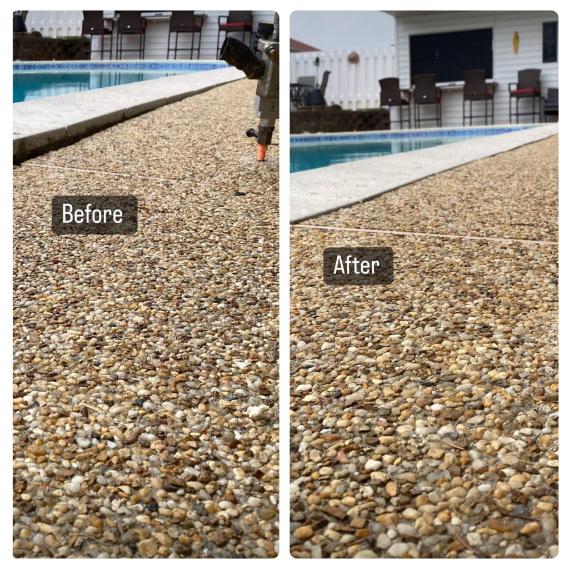
Your pool deck is more than just a perimeter around your swimming pool; it’s an integral part of your outdoor living space, a place for relaxation, entertaining, and making memories. However, over time, many Dallas homeowners find their beautiful pool decks beginning to sink, crack, and become uneven. This isn’t just an aesthetic issue; it can lead to significant safety hazards and further structural damage. At FoamWorks Concrete Leveling Dallas, we specialize in advanced, efficient, and long-lasting solutions for pool deck concrete leveling Dallas using state-of-the-art polyurethane foam injection. If your pool deck is showing signs of distress, it’s time to understand why it’s happening and how our innovative approach can restore its safety and beauty.

Why Pool Decks Sink and Become Uneven in Dallas: Understanding the Root Causes

Dallas, with its unique geological characteristics and climate, presents a challenging environment for concrete slabs, especially those exposed to constant moisture and temperature fluctuations like pool decks. Understanding these underlying causes is the first step toward effective and permanent concrete leveling Dallas.

Expansive Clay Soils: The Dallas Foundation Challenge

The primary culprit behind sinking concrete in North Texas is the region’s expansive clay soil, often referred to as “black gumbo.” These soils are highly reactive to moisture changes. When they absorb water, they swell significantly, exerting upward pressure on concrete slabs. Conversely, during dry periods, they shrink, creating voids beneath the concrete. This constant cycle of expansion and contraction leads to soil movement, which in turn causes concrete slabs, including your pool deck, to shift, crack, and settle unevenly. The edges of a pool deck are particularly vulnerable as they are often directly exposed to the elements and drainage patterns.

Extreme Dallas Heat and Drought Cycles

Dallas summers are notorious for their intense heat and prolonged drought periods. These conditions exacerbate the issues caused by expansive soils. The scorching sun bakes the ground, drawing moisture out of the soil at a rapid rate. This rapid drying leads to significant soil shrinkage, creating large gaps and voids beneath your pool deck. When the supporting soil erodes or compacts, the concrete above it loses its foundation and begins to sink under its own weight, leading to noticeable dips and uneven sections.

Poor Drainage and Water Intrusion

Water is both a blessing and a curse for concrete. While essential for curing, uncontrolled water around your pool deck can be highly destructive. Poor drainage is a major contributor to soil erosion and saturation. If rainwater or overflow from your pool isn’t properly directed away from the deck, it can seep into the soil beneath. This saturates the expansive clay, causing it to swell excessively. When the water eventually dissipates, the soil shrinks, leaving behind voids. Furthermore, persistent water flow can wash away finer soil particles, creating larger pockets of instability beneath the slab. Over time, this constant cycle of saturation and drying, coupled with soil erosion, inevitably leads to a sunken and unstable pool deck. Issues like clogged gutters, improper grading, or even a leaking pool pipe can contribute significantly to these drainage problems.

Compacted Backfill and Construction Practices

During the initial construction of your pool, the soil around the excavation is often disturbed and then backfilled. If this backfill isn’t properly compacted before the concrete pool deck is poured, it can settle significantly over time. This settlement creates unsupported areas beneath the slab, leading to cracks and sinking. While not as common as soil expansion, poor compaction during construction can be a long-term factor in pool deck instability.

The Dangers of a Sunken Pool Deck: More Than Just an Eyesore

A sunken or uneven pool deck is far more than an aesthetic imperfection; it poses several serious risks to your family, guests, and even the structural integrity of your property. Addressing these issues promptly with professional concrete raising Dallas is crucial.

Trip Hazards and Increased Risk of Injury

This is arguably the most immediate and critical danger. Uneven concrete slabs create dangerous trip hazards, especially around a pool where people are often barefoot, wet, and distracted. A slight difference in elevation, even an inch, can easily cause someone to stumble and fall, leading to sprains, fractures, head injuries, or worse. Children, the elderly, and those with mobility issues are particularly vulnerable. The last thing any homeowner wants is an injury occurring on their property, especially in a recreational area like a pool deck.

Water Pooling and Drainage Issues

When sections of your pool deck sink, they create depressions where water can accumulate instead of draining away. This standing water presents several problems:

  • Slippery Surfaces: Stagnant water can make the concrete extremely slippery, further increasing the risk of falls.
  • Algae and Mildew Growth: Constant moisture promotes the growth of unsightly and slippery algae, mold, and mildew, which can also be a health hazard.
  • Mosquito Breeding Ground: Standing water is a perfect breeding ground for mosquitoes, which are not only annoying but can also carry diseases.
  • Further Damage to Concrete: Prolonged exposure to standing water can accelerate the deterioration of the concrete itself, leading to spalling, pitting, and further cracking.
  • Foundation Issues: If water consistently pools near your home’s foundation, it can seep into the soil and potentially cause foundation problems for your house, a much more expensive repair.

Structural Damage to the Pool and Surrounding Structures

A sinking pool deck can exert tremendous pressure on the coping and beam of your swimming pool. This constant, uneven stress can lead to:

  • Cracks in Pool Walls: The shifting concrete can cause cracks in the pool’s shell or walls, leading to leaks and costly repairs.
  • Damage to Plumbing: Underground plumbing lines running beneath or near the deck can be stressed or ruptured by shifting concrete, resulting in leaks and water waste.
  • Compromised Skimmers and Returns: The connections between the deck and pool features like skimmers and return jets can be damaged, leading to leaks or reduced efficiency.
  • Impact on Fencing and Landscaping: Adjacent fences, retaining walls, or landscaping features can also be affected by the shifting concrete, leading to misalignment or damage.

Reduced Property Value and Curb Appeal

Beyond the safety and structural concerns, an uneven, cracked, and unsightly pool deck significantly detracts from your home’s curb appeal and overall property value. It can make your outdoor space feel neglected and unsafe, impacting your enjoyment and making it less attractive to potential buyers should you decide to sell.

How Polyurethane Foam Injection Fixes Sunken Pool Decks: A Step-by-Step Process

At FoamWorks Concrete Leveling Dallas, we employ a cutting-edge, non-invasive method for pool deck concrete leveling Dallas: polyurethane foam injection. This process is highly effective, environmentally friendly, and offers a long-lasting solution to your sunken concrete problems.

Step 1: Thorough Inspection and Assessment

Our process begins with a comprehensive on-site evaluation by a FoamWorks expert. We meticulously inspect your pool deck, identifying all sunken areas, cracks, and signs of instability. We assess the severity of the settlement, the type of soil, and any contributing factors like drainage issues. This initial assessment allows us to develop a precise plan tailored to your specific needs and provide an accurate estimate for the Dallas concrete repair.

Step 2: Strategic Drilling of Small Injection Holes

Once the plan is in place, our skilled technicians strategically drill a series of small, penny-sized (typically 5/8-inch) holes through the sunken concrete slab. These holes are carefully placed in the areas requiring lift and stabilization, ensuring optimal distribution of the polyurethane foam. The small size of these holes means minimal disruption to your pool deck’s surface and aesthetics.

Step 3: Injecting High-Density Polyurethane Foam

Using specialized equipment, we inject a two-part, high-density polyurethane foam mixture into the voids beneath the concrete slab through the drilled holes. This isn’t just any foam; it’s an engineered material designed specifically for concrete leveling and soil stabilization. Upon injection, the liquid polymer rapidly expands, filling all voids and compacting the loose soil beneath the slab. This expansion occurs within seconds, creating a dense, stable, and waterproof foundation.

Step 4: Precise Lifting and Leveling

As the foam expands, it exerts controlled upward pressure on the sunken concrete slab. Our experienced technicians carefully monitor the lifting process using advanced laser levels and other precision tools. This allows for an incredibly accurate and gradual lift, ensuring the pool deck is raised to its original, desired elevation without causing further stress or damage to the concrete or surrounding structures. The process is highly controlled, preventing over-lifting or uneven results.

Step 5: Hole Patching and Site Cleanup

Once the pool deck has been successfully raised and stabilized, the small injection holes are patched with a non-shrink, color-matched cementitious material, blending seamlessly with your existing concrete. Our team then conducts a thorough cleanup of the work area, leaving your pool deck looking pristine and ready for immediate use. The entire process is typically completed within a few hours to a single day, depending on the scope of the project.

Why PolyFoam is Better Than Mudjacking or Replacement for Pool Decks

When considering options for pool deck concrete leveling Dallas, homeowners often encounter traditional methods like mudjacking or the drastic measure of full concrete replacement. While these methods have their place, polyurethane foam injection offers significant advantages, particularly for the sensitive environment of a pool deck.

Polyurethane Foam vs. Mudjacking (Slabjacking)

Mudjacking, also known as slabjacking or concrete jacking, involves pumping a cementitious slurry (a mixture of soil, cement, and water) beneath the concrete slab to lift it. While it’s a form of concrete leveling, it comes with several drawbacks compared to polyfoam:

  • Weight: Mudjacking slurry is extremely heavy, often adding 100-150 pounds per cubic foot. This added weight can put additional stress on already unstable soil, potentially leading to future settlement. Polyurethane foam, conversely, is lightweight, adding only 3-5 pounds per cubic foot, minimizing future settlement risks.
  • Injection Hole Size: Mudjacking requires larger injection holes (typically 1-2 inches in diameter) to accommodate the thick slurry. These larger holes are more noticeable and can be harder to patch inconspicuously on a pool deck. Polyfoam uses small, penny-sized (5/8-inch) holes that are virtually unnoticeable once patched.
  • Material Stability: The mudjacking slurry can shrink over time as the water evaporates, potentially leading to re-settlement. Polyurethane foam is waterproof, inert, and does not shrink or degrade, offering a more permanent solution.
  • Cleanliness and Mess: Mudjacking is a much messier process, often leaving behind slurry spills and residue that can be difficult to clean, especially around a pool. Polyfoam injection is a much cleaner process with minimal environmental impact.
  • Cure Time: Mudjacking requires a longer cure time, often days, before the concrete can bear full weight. Polyurethane foam cures rapidly, allowing for immediate use of the pool deck after the repair.
  • Precision: Due to the viscous nature of the slurry, precise lifting with mudjacking can be challenging. Polyurethane foam’s controlled expansion allows for incredibly accurate and gradual lifting.

Polyurethane Foam vs. Concrete Replacement

Completely replacing your pool deck is the most drastic and expensive option. While sometimes necessary for severely damaged or structurally compromised slabs, it’s often overkill for simple settlement issues. Here’s why polyfoam is superior for most cases:

  • Cost: Concrete replacement is significantly more expensive than polyurethane foam injection. It involves demolition, hauling away old concrete, purchasing new materials, and extensive labor. Polyfoam typically costs 50-70% less than replacement.
  • Time and Disruption: Replacing a pool deck is a lengthy and disruptive process. It can take weeks, during which your pool area is a construction zone, making it unusable. Polyfoam injection is usually completed in hours, with the pool deck ready for immediate use.
  • Environmental Impact: Concrete replacement generates a large amount of waste that ends up in landfills. Polyurethane foam injection is a much greener solution, extending the life of existing concrete and reducing waste.
  • Aesthetics: New concrete will rarely match the color and texture of your existing pool deck and surrounding concrete, creating an obvious patchwork. Polyfoam preserves your existing concrete, maintaining a consistent aesthetic.
  • Landscaping and Plumbing: Replacement often requires disturbing surrounding landscaping, irrigation, and potentially even pool plumbing. Polyfoam is minimally invasive, protecting your existing yard and infrastructure.

Cost Comparison and Timeline for Pool Deck Leveling

Understanding the financial and time commitments for pool deck concrete leveling Dallas is crucial for homeowners. FoamWorks Concrete Leveling Dallas is committed to transparency and providing the most cost-effective, efficient solutions.

Cost Comparison

The cost of pool deck leveling varies depending on the severity of the settlement, the square footage of the affected area, and the specific challenges of the site. However, generally speaking, polyurethane foam injection offers significant savings compared to other methods:

  • Polyurethane Foam Injection: This is typically the most cost-effective solution for sunken concrete. It generally ranges from $4 to $8 per square foot, depending on the depth of the voids and the amount of material needed. This cost can vary, but it is substantially less than replacement.
  • Mudjacking: While often cheaper than replacement, mudjacking can still be more expensive than polyfoam in some cases, particularly when considering the potential for re-settlement and the need for future repairs. It often falls in the range of $3 to $7 per square foot, but with the aforementioned drawbacks.
  • Concrete Replacement: This is by far the most expensive option. Costs for demolition, removal, new materials, and installation can range from $10 to $25 per square foot or more, depending on the complexity, access, and finish desired. For an average pool deck, this can easily run into thousands, if not tens of thousands, of dollars.

It’s important to note that these are general estimates. For an accurate quote, FoamWorks Concrete Leveling Dallas offers free, no-obligation on-site inspections and estimates tailored to your specific pool deck.

Timeline

The efficiency of polyurethane foam injection is one of its greatest advantages:

  • Polyurethane Foam Injection: Most pool deck leveling projects using polyfoam are completed within a few hours to one full day. The foam cures rapidly, allowing for immediate use of the pool deck and surrounding areas. This means minimal disruption to your daily routine and quick restoration of your outdoor living space.
  • Mudjacking: While quicker than replacement, mudjacking can still take longer than polyfoam, often requiring a full day or more depending on the scope. The concrete may also need several days to fully cure before heavy use.
  • Concrete Replacement: This is a multi-stage process that can take anywhere from several days to a few weeks. This includes demolition, removal, site preparation, pouring, and then a lengthy curing period (often 7-28 days) before the new concrete reaches its full strength and can be used. This prolonged disruption means your pool area will be inaccessible for an extended period.

When considering both cost and time, polyurethane foam injection clearly stands out as the most efficient and economical choice for most concrete leveling Dallas needs, especially for pool decks.

Why Dallas Homeowners Choose FoamWorks for Pool Deck Leveling

When it comes to something as important as your home’s safety and value, choosing the right contractor for pool deck concrete leveling Dallas is paramount. FoamWorks Concrete Leveling Dallas has built a reputation for excellence, reliability, and superior results, making us the preferred choice for countless Dallas homeowners.

Local Expertise and Understanding of Dallas Soils

We are a local Dallas company, deeply familiar with the unique challenges presented by North Texas’s expansive clay soils and extreme weather patterns. Our technicians are trained specifically to address these local conditions, ensuring that our solutions are not just temporary fixes but long-lasting repairs designed to withstand the Dallas environment. We understand the specific nuances that cause sunken pool deck repair to be a common issue here.

Advanced Polyurethane Foam Technology

FoamWorks exclusively uses state-of-the-art, high-density polyurethane foam that is engineered for superior strength, durability, and environmental safety. This isn’t just generic foam; it’s a specialized material designed to provide a stable, waterproof, and long-lasting foundation for your concrete slabs. Our commitment to using the best technology ensures a superior outcome for every concrete raising Dallas project.

Experienced and Certified Technicians

Our team consists of highly trained, certified, and experienced technicians who specialize in polyurethane foam injection. They possess the expertise to accurately diagnose issues, precisely inject the foam, and meticulously monitor the lifting process to achieve perfect results. Safety, precision, and customer satisfaction are at the core of their work.

Non-Invasive and Environmentally Friendly Process

We pride ourselves on offering a solution that is minimally invasive. Our small injection holes and clean process mean virtually no disruption to your landscaping, pool, or daily life. Furthermore, our polyurethane foam is inert and environmentally safe, making it a responsible choice for your home and the planet. We aim to extend the life of your existing concrete, reducing waste and the need for new materials.

Exceptional Customer Service and Transparency

From your initial contact to the completion of the project, FoamWorks Concrete Leveling Dallas is dedicated to providing an unparalleled customer experience. We offer free, no-obligation estimates, clear communication, and transparent pricing. We take the time to explain the process, answer all your questions, and ensure you feel confident and informed every step of the way. Our goal is your complete satisfaction.

Long-Lasting Results and Warranty

We stand behind the quality of our work. Our polyurethane foam solutions are designed to provide a durable and long-lasting repair for your sunken pool deck. We are confident in our methods and materials, which is why we offer a comprehensive warranty on our services, giving you peace of mind that your investment is protected.

Choosing FoamWorks Concrete Leveling Dallas means choosing a partner who understands your needs, uses the best technology, and is committed to delivering exceptional results for your pool deck concrete leveling Dallas project. We restore not just your concrete, but also the safety, beauty, and value of your outdoor living space.

Restore Your Pool Deck’s Safety and Beauty Today!

Don’t let a sunken or uneven pool deck compromise the safety and enjoyment of your outdoor oasis. The dangers of trip hazards, water pooling, and potential structural damage are too significant to ignore. At FoamWorks Concrete Leveling Dallas, we offer the most advanced, efficient, and long-lasting solution for pool deck concrete leveling Dallas using our proven polyurethane foam injection technology.

Our expert team is ready to assess your pool deck’s specific needs and provide a tailored, cost-effective solution that will restore its integrity and aesthetic appeal. Experience the FoamWorks difference – a clean, fast, and durable repair that allows you to get back to enjoying your pool deck immediately.

Contact FoamWorks Concrete Leveling Dallas today for a free, no-obligation inspection and estimate. Visit our website at foamworkspro.com or give us a call to schedule your appointment. Let us help you reclaim your beautiful and safe pool deck!

“`

Concrete Leveling Dallas - Concrete Raising Dallas - Concrete Lifting Dallas - FoamWorks Dallas Fort Worth

Polyurethane Foam Concrete Leveling: How Long Does It Last in Dallas, TX?

Polyurethane Foam Concrete Leveling: How Long Does It Last in Dallas, TX?

When considering concrete repair for sunken or settled slabs in Dallas, TX, one of the most common questions homeowners and business owners ask is about durability: What is the lifespan of polyurethane foam concrete leveling compared to traditional methods in Dallas? The direct answer is that high-quality polyurethane foam concrete leveling, when applied correctly by experienced professionals like FoamWorks Concrete Leveling Dallas, can last for many decades – often 10 to 20 years or even longer. This significantly surpasses the typical lifespan of traditional methods like mudjacking, which often requires re-treatment sooner due to its heavier, less stable material.

Polyurethane foam injection offers a robust, long-term solution for concrete leveling because it addresses the root causes of settlement with a lightweight, durable, and water-resistant material. Unlike older methods, polyfoam doesn’t add significant weight to the soil, nor does it degrade when exposed to moisture, making it ideal for the varied soil conditions and occasional heavy rains we experience in the Dallas area.

Understanding Polyurethane Foam: The Modern Solution for Concrete Leveling

Before diving into lifespan specifics, it’s helpful to understand what polyurethane foam concrete leveling entails. This innovative process involves injecting a specialized, expanding foam beneath sunken concrete slabs. The foam expands rapidly, filling voids, compacting loose soil, and gently lifting the concrete back to its original, level position. It’s a precise, clean, and incredibly effective method for addressing issues with concrete sidewalks, driveways, patios, pool decks, and even slab foundations across Dallas and surrounding areas.

If you’re curious about the fundamentals of this process, we have a detailed guide that explains What is Concrete Raising & Why Use It, highlighting its many benefits for properties in Dallas.

Why Polyurethane Foam Offers Superior Longevity

Several key characteristics contribute to the extended lifespan of polyurethane foam concrete leveling:

  • Lightweight Material: Polyurethane foam is incredibly lightweight, typically weighing only 2-4 pounds per cubic foot. This is crucial because it doesn’t add significant load to the underlying soil, preventing future settlement caused by the repair material itself. Traditional methods, using heavy mud or concrete slurries, can actually exacerbate settlement over time due to the added weight.
  • High Compressive Strength: Despite its light weight, cured polyurethane foam possesses exceptional compressive strength, providing a stable and durable base for the concrete slab. It can withstand significant loads without breaking down.
  • Hydrophobic Properties: The foam used in concrete leveling is hydrophobic, meaning it repels water. This is a huge advantage in areas like Dallas where soil moisture can fluctuate. Water intrusion is a primary cause of soil erosion and concrete settlement. By creating a waterproof barrier and not degrading in the presence of water, the foam helps protect the underlying soil from future erosion.
  • Void Filling and Soil Stabilization: The expanding nature of the foam allows it to fill even the smallest voids beneath the slab and compact loose soil, providing a solid, stable foundation that resists future movement. This comprehensive approach to stabilization is key to long-term results.
  • Resistance to Decomposition: Unlike organic materials or some traditional fillers, polyurethane foam is inert and does not decompose or break down over time due to biological activity, chemicals, or environmental factors.

Comparing Lifespan: Polyurethane Foam vs. Traditional Methods

When evaluating concrete leveling options in Dallas, the lifespan comparison is often a deciding factor. Let’s look at how polyurethane foam stacks up against common alternatives:

Polyurethane Foam Concrete Leveling

As mentioned, polyurethane foam solutions typically last 10-20 years, often much longer. This longevity is due to its durable, lightweight, hydrophobic, and soil-stabilizing properties. The material itself is designed to be a permanent solution, and its effectiveness is primarily limited by extreme, unforeseen geological shifts or improper initial installation.

Mudjacking (Slabjacking)

Mudjacking involves pumping a heavy cement-based slurry beneath the concrete. While it can effectively raise slabs, its lifespan is generally shorter, often ranging from 2-5 years, sometimes up to 10 years in ideal conditions. The primary reasons for its shorter lifespan include:

  • Heavy Material: The mudjacking slurry is very heavy, adding significant weight to already compromised soil. This can lead to re-settlement over time.
  • Water Soluble: The cementitious slurry can erode or wash away if exposed to water, especially in areas with poor drainage or high water tables.
  • Larger Injection Holes: Mudjacking requires larger injection holes (typically 1-2 inches in diameter), which can be more noticeable and potentially weaken the slab.

For a more in-depth comparison of these two popular methods, you can read our detailed article on Polyurethane Foam vs Mudjacking.

Slab Replacement

Completely replacing a concrete slab is, of course, a permanent solution for the slab itself. However, if the underlying soil issues that caused the original settlement are not addressed, a new slab can also settle over time. Replacement is also significantly more expensive, disruptive, and time-consuming than leveling. It involves demolition, removal, new material, and curing time, costing a fraction of the cost of replacement to level with foam.

The materials used in modern concrete raising and leveling, such as those employed by FoamWorks Concrete Leveling Dallas, are engineered for long-term performance. You can learn more about the science behind these advanced materials at Poly foam concrete raising & concrete leveling.

Factors Influencing the Lifespan of Concrete Leveling

While polyurethane foam offers exceptional durability, several factors can influence the exact lifespan of any concrete leveling project in Dallas:

1. Soil Conditions

Dallas’s expansive clay soils are notorious for their shrink-swell potential, which is a primary cause of concrete settlement. Polyurethane foam is highly effective in these conditions because it fills voids and stabilizes the soil. However, extreme, unaddressed drainage issues or significant geological shifts can still impact long-term stability.

2. Drainage Around the Property

Proper drainage is paramount. If water consistently pools around the foundation or under slabs, it can eventually erode even stabilized soil. Ensuring gutters are clear, downspouts extend away from the foundation, and the ground slopes away from structures will significantly extend the life of any concrete repair.

3. Quality of Installation

The expertise of the contractor plays a critical role. Experienced professionals like FoamWorks Concrete Leveling Dallas understand the nuances of soil mechanics, foam injection techniques, and proper lift. Incorrect application can compromise the repair’s longevity.

4. Initial Slab Condition

While foam leveling can fix many issues, severely cracked or deteriorated slabs might benefit more from replacement or a combination of repairs. A professional assessment will determine the best course of action.

5. Ongoing Maintenance

While polyurethane foam is low maintenance, periodic inspections of your concrete and addressing any new drainage issues or heavy loads on the slab can help ensure its long-term stability.

Why Choose FoamWorks Concrete Leveling Dallas for Lasting Results?

At FoamWorks Concrete Leveling Dallas, we are committed to providing the most durable and effective concrete leveling solutions in the Dallas area. Our expertise in polyurethane foam injection means we deliver repairs that stand the test of time, giving you peace of mind and saving you money in the long run. We understand the unique challenges posed by Dallas’s climate and soil, and we tailor our solutions to ensure maximum longevity for your concrete surfaces.

Frequently Asked Questions About Polyurethane Foam Lifespan

Q: Is polyurethane foam environmentally friendly?

A: Modern polyurethane foams used in concrete leveling are inert, non-toxic once cured, and do not leach harmful chemicals into the soil. They are also made from recycled materials in some cases, making them a more environmentally conscious choice than some alternatives.

Q: Can polyurethane foam be used in all weather conditions in Dallas?

A: Polyurethane foam can be injected in a wide range of temperatures. While extreme cold can slow down the chemical reaction, experienced technicians can adjust the process to ensure proper curing and effectiveness in most Dallas weather conditions.

Q: How quickly can I use my concrete slab after polyurethane foam leveling?

A: One of the significant advantages of polyurethane foam is its rapid cure time. Most slabs can be returned to full service within minutes to a few hours after the injection process, minimizing disruption to your home or business in Dallas.

Q: Will the foam degrade over time if exposed to water?

A: No, the polyurethane foam used for concrete leveling is hydrophobic and does not degrade or wash away when exposed to water. This makes it an excellent choice for areas prone to moisture, providing a stable, long-lasting solution.

Q: Is polyurethane foam leveling more expensive than mudjacking?

A: While the initial cost of polyurethane foam leveling might sometimes be slightly higher than mudjacking, its significantly longer lifespan and superior stability often make it the more cost-effective solution in the long run, avoiding repeated repairs.

Ready for a Long-Lasting Concrete Solution in Dallas?

Don’t let sunken concrete detract from your property’s value or create tripping hazards. FoamWorks Concrete Leveling Dallas offers state-of-the-art polyurethane foam injection services designed to provide durable, long-lasting results for your home or business. Our team is ready to assess your needs and provide a tailored solution that will keep your concrete level for decades to come.

Contact FoamWorks Concrete Leveling Dallas today for a free consultation and discover the lasting benefits of polyurethane foam concrete leveling. Call us to schedule your appointment!

Concrete Leveling Dallas - Concrete Raising Dallas - Concrete Lifting Dallas - FoamWorks Dallas Fort Worth

Polyurethane vs. Mudjacking: Which Concrete Leveling Method is Best for Your Dallas Property?

Polyurethane vs. Mudjacking: Which Concrete Leveling Method is Best for Your Dallas Property?

When your concrete slabs in Dallas start to sink, crack, or become uneven, you’re faced with a choice: replacement or repair. For repair, the two most common methods for concrete leveling are polyurethane foam injection and traditional mudjacking. While both aim to raise and stabilize settled concrete, polyurethane foam injection is generally considered the superior, more modern, and longer-lasting solution for Dallas homeowners and businesses due to its lightweight nature, smaller injection holes, and greater durability, especially when compared to the older, more invasive mudjacking technique.

Living in Dallas, you’ve likely seen concrete issues firsthand. From driveways to patios, and even commercial slabs, settling concrete isn’t just an eyesore; it can be a tripping hazard and lead to further structural problems. Understanding the differences between these two primary concrete raising methods is crucial for making an informed decision for your property.

What is Mudjacking?

Mudjacking, also known as slabjacking or concrete jacking, is a long-standing method for raising settled concrete. The process involves drilling several 1-inch to 2-inch holes through the sunken concrete slab. A slurry mixture, typically composed of water, soil, cement, and other additives, is then pumped under high pressure through these holes. This slurry fills any voids beneath the slab and, as more material is pumped, creates hydraulic pressure that lifts the concrete back to its original level.

Pros of Mudjacking:

  • Established Method: It’s been around for decades, so many contractors are familiar with it.
  • Material Cost: The materials used in the slurry can sometimes be less expensive than polyurethane foam, though this doesn’t always translate to a lower overall project cost due to labor and equipment.

Cons of Mudjacking:

  • Heavy Load: The slurry is very heavy, adding significant weight to the soil beneath the slab. If the original soil couldn’t support the concrete, adding more weight can lead to future settlement.
  • Large Holes: The large injection holes (1-2 inches in diameter) are more noticeable and can compromise the aesthetic of the concrete surface.
  • Messy Process: The slurry can be messy to work with, potentially spilling onto surrounding areas.
  • Curing Time: Mudjacking slurry typically requires a longer curing time before the concrete can bear full weight, sometimes up to a few days.
  • Limited Application: It’s not ideal for all types of concrete issues or soil conditions, especially in areas prone to moisture.
  • Less Durable: The material can erode over time, especially with water exposure, leading to future settlement.

What is Polyurethane Foam Concrete Leveling?

Polyurethane foam injection is a state-of-the-art method that has revolutionized concrete raising. This process involves drilling much smaller, penny-sized holes (typically 5/8-inch) into the sunken concrete. A high-density, expanding polyurethane foam is then injected through these holes. The foam rapidly expands and hardens, filling voids, compacting the soil, and gently lifting the concrete slab to its desired position. This method is what FoamWorks Concrete Leveling Dallas specializes in, offering a modern, efficient, and durable solution for concrete problems across the Dallas area.

To learn more about this innovative process and its benefits, check out What is Concrete Raising & Why Use It.

Pros of Polyurethane Foam Injection:

  • Lightweight: The expanding foam is incredibly lightweight, adding minimal burden to the underlying soil. This significantly reduces the risk of future settlement caused by added weight.
  • Small Injection Holes: The tiny, nearly invisible injection holes (about the size of a penny) are far less noticeable than mudjacking holes, preserving the appearance of your concrete.
  • Fast Curing Time: Polyurethane foam cures rapidly, often allowing the concrete to be used within minutes to hours after the repair is complete. This means minimal disruption to your daily routine in Dallas.
  • Water Resistant: The foam is hydrophobic, meaning it repels water. This makes it an excellent choice for areas prone to moisture, as it won’t wash away or erode like mudjacking slurry. It also helps stabilize the sub-base and can fill voids that might otherwise collect water.
  • Strong and Durable: Once cured, the foam is incredibly strong and provides a stable, long-lasting foundation for your concrete slab. You can read more about the materials used in Poly foam concrete raising & concrete leveling.
  • Versatile Application: Polyurethane foam can be used for a wide range of applications, from residential sidewalks and driveways to large commercial slabs, warehouse floors, and even seawall stabilization.
  • Environmentally Friendly: Many polyurethane foams are made from recycled materials and are inert once cured, posing no threat to the environment.
  • Precision Lifting: The controlled expansion of the foam allows for highly precise lifting, ensuring the slab is raised evenly and accurately.

Cons of Polyurethane Foam Injection:

  • Cost: The material cost for polyurethane foam can be higher than mudjacking slurry. However, this is often offset by reduced labor, faster project completion, and the long-term durability, making it a more cost-effective solution in the long run.
  • Specialized Equipment: Requires specialized equipment and trained technicians, like those at FoamWorks Concrete Leveling Dallas, to ensure proper application.

Polyurethane Foam vs Mudjacking: A Direct Comparison for Dallas Properties

When evaluating Polyurethane Foam vs Mudjacking for your Dallas property, consider these key differences:

  • Hole Size: Polyurethane uses small, dime-sized holes (5/8-inch); Mudjacking uses large, golf ball-sized holes (1-2 inches).
  • Weight: Polyurethane foam is lightweight (2-4 lbs per cubic foot); Mudjacking slurry is heavy (100-120 lbs per cubic foot).
  • Curing Time: Polyurethane cures in minutes to hours; Mudjacking cures in 1-3 days.
  • Durability: Polyurethane is water-resistant and long-lasting; Mudjacking slurry can erode over time.
  • Precision: Polyurethane offers precise, controlled lifting; Mudjacking can be less predictable.
  • Mess: Polyurethane is a cleaner process; Mudjacking can be quite messy.
  • Cost-Effectiveness: While initial material cost might be higher for foam, its longevity, minimal disruption, and reduced risk of re-settlement often make it significantly more affordable than concrete replacement and a better long-term investment than mudjacking.

For most concrete leveling needs in Dallas, polyurethane foam injection offers a superior combination of efficiency, durability, and aesthetic appeal. It addresses the root cause of settlement without adding excessive weight, ensuring a stable and lasting repair.

Why Choose Polyurethane Foam for Your Dallas Concrete?

Dallas’s expansive clay soils are notorious for causing concrete settlement due to their tendency to swell when wet and shrink when dry. This constant movement creates voids beneath slabs. Polyurethane foam not only fills these voids but also compacts the loose soil, creating a more stable base. Its hydrophobic properties are particularly beneficial in our climate, preventing water from undermining the repair.

Whether it’s a sunken driveway, an uneven patio, or a rocking commercial slab, FoamWorks Concrete Leveling Dallas provides expert polyurethane foam injection services designed to withstand the unique challenges of our local environment.

Frequently Asked Questions About Concrete Leveling in Dallas

How long does polyurethane concrete leveling last?

When properly applied, polyurethane concrete leveling is a permanent solution. The foam is inert, won’t degrade, and is resistant to water, meaning it can last for decades, often for the lifetime of the concrete slab itself.

Is polyurethane foam safe for the environment?

Yes, the polyurethane foam used by reputable companies like FoamWorks is environmentally inert once cured. It doesn’t leach chemicals into the soil or groundwater, making it a safe choice for your property and the Dallas ecosystem.

Can polyurethane foam be used for all types of concrete?

Polyurethane foam is incredibly versatile and can be used to raise and stabilize almost any type of sunken concrete slab on grade, including sidewalks, driveways, patios, pool decks, garage floors, and even interior commercial slabs and foundations.

How much does concrete leveling cost in Dallas?

The cost of concrete leveling varies depending on the size of the area, the extent of the settlement, and the specific method used. While we can’t give exact figures without an inspection, polyurethane foam injection is typically a fraction of the cost of replacing concrete and a highly cost-effective long-term solution compared to mudjacking’s potential for future re-settlement.

How quickly can I use my concrete after polyurethane leveling?

One of the biggest advantages of polyurethane foam is its rapid cure time. Most residential slabs can be walked on immediately and driven on within 15-60 minutes after the repair is completed, minimizing disruption to your Dallas home or business.

Ready to Level Your Dallas Concrete?

Don’t let sunken concrete detract from your property’s value or create safety hazards. When considering polyurethane concrete leveling vs mudjacking in Dallas, the choice for a durable, efficient, and less invasive repair is clear. FoamWorks Concrete Leveling Dallas is your local expert, providing top-tier polyurethane foam injection services to restore your concrete surfaces quickly and effectively. Contact us today for a free consultation and see how we can help you achieve perfectly level concrete!

Concrete Leveling Dallas - Concrete Raising Dallas - Concrete Lifting Dallas - FoamWorks Dallas Fort Worth

Avoiding Pitfalls: Red Flags When Choosing a Concrete Leveling Company in Dallas

Avoiding Pitfalls: Red Flags When Choosing a Concrete Leveling Company in Dallas

When you notice your concrete slabs sinking or becoming uneven, it’s natural to seek a professional concrete leveling company in Dallas to restore their safety and appearance. However, not all companies are created equal, and choosing the wrong one can lead to wasted money, shoddy work, and ongoing frustration. So, what are the red flags to watch out for when hiring a concrete leveling company in Dallas? The most critical red flags include a lack of proper licensing and insurance, vague or evasive answers about their process, overly lowball bids that seem too good to be true, aggressive sales tactics, and a poor track record indicated by negative reviews or a lack of verifiable experience.

Understanding these warning signs can help you make an informed decision and ensure you partner with a reputable and effective service provider for your concrete repair needs. Let’s dive deeper into what to look for and, more importantly, what to avoid.

Lack of Proper Licensing and Insurance

One of the most significant red flags when evaluating a concrete leveling company is their inability or unwillingness to provide proof of proper licensing and insurance. In Dallas, and indeed across Texas, any legitimate contractor should be able to present these documents readily. Licensing ensures they meet state and local requirements for competence and ethical operation, while comprehensive insurance (liability and workers’ compensation) protects both their crew and your property in case of an accident.

What to look for: Ask for specific license numbers and insurance certificates. Don’t just take their word for it. A reputable company will be transparent and proud to show they operate legally and responsibly.

Vague or Evasive Answers About Their Process

A professional concrete leveling company should be able to clearly explain their methods, materials, and the expected outcome of the project. If a company gives you vague answers, avoids technical details, or seems to gloss over how they plan to address your specific problem, consider it a major red flag.

For instance, they should be able to articulate the benefits of their chosen method, such as polyurethane foam injection, and how it compares to other techniques. If you’re curious about what is concrete raising and why use it, a good contractor will walk you through the entire process, from assessment to completion. They should also be transparent about the materials they use, like the advanced Poly foam concrete raising & concrete leveling products that offer durable, long-lasting results.

Unclear Explanation of Materials and Techniques

Be wary if a company can’t differentiate between various concrete leveling techniques or if they push a single method without explaining why it’s the best fit for your situation. For example, understanding the differences between polyurethane foam vs mudjacking is crucial for making an informed decision about your concrete repair. A trustworthy company will explain why polyurethane foam is often superior for its lightweight, durable, and less invasive properties.

Overly Lowball Bids and Pressure Sales Tactics

While everyone wants a good deal, an estimate that is significantly lower than others you’ve received should raise a red flag. Extremely low bids often indicate a company might be cutting corners on materials, labor, or insurance, or they might add hidden fees later. Reputable concrete leveling companies provide fair, competitive pricing that reflects the quality of their work and materials.

Similarly, be cautious of high-pressure sales tactics. If a company tries to rush you into signing a contract on the spot, offers steep

Concrete Leveling Dallas - Concrete Raising Dallas - Concrete Lifting Dallas - FoamWorks Dallas Fort Worth

Bishop Arts District Patio Leveling: Revitalizing Outdoor Spaces with PolyFoam in Dallas

Bishop Arts District Patio Leveling: Revitalizing Outdoor Spaces with PolyFoam in Dallas

The Bishop Arts District in Dallas, TX, is renowned for its vibrant culture, unique shops, and charming eateries. It’s a place where community thrives, and much of that community interaction happens outdoors, whether on restaurant patios, residential backyards, or public gathering spots. However, over time, even the most beautifully designed concrete patios can suffer from settlement, cracking, and uneven surfaces due to soil erosion, poor drainage, or shifting ground. This not only detracts from the aesthetic appeal but also creates tripping hazards and can lead to further structural damage.

If you own a home or business in the Bishop Arts District and are noticing your patio sinking or becoming uneven, it’s time to consider a lasting solution. FoamWorks Concrete Leveling Dallas specializes in revitalizing these essential outdoor spaces using state-of-the-art polyurethane foam injection. This innovative method offers a quick, efficient, and cost-effective way to restore your patio to its original glory, ensuring safety and enhancing curb appeal.

Why Do Patios Sink in Dallas?

Dallas’s unique climate and soil conditions often contribute to concrete settlement. Expansive clay soils, common in North Texas, can swell when wet and shrink when dry, leading to soil movement beneath concrete slabs. Additionally, heavy rains can wash away supporting soil, creating voids. Tree roots, plumbing leaks, and even poor initial compaction during construction can also play a role. When the underlying support is compromised, concrete patios, sidewalks, and driveways begin to crack and sink.

Ignoring these issues can lead to more significant problems down the line, including water pooling, foundation damage to adjacent structures, and increased liability for trip-and-fall accidents. Addressing sunken concrete promptly is crucial for maintaining the value and safety of your Bishop Arts District property.

The Polyurethane Foam Advantage for Patio Leveling

At FoamWorks, we utilize a cutting-edge technique known as polyurethane foam injection for concrete raising. This process involves drilling small, penny-sized holes through the sunken concrete slab. Then, a specialized, high-density polyurethane foam is injected beneath the slab. This foam expands rapidly, filling voids and gently lifting the concrete back to its desired level. The process is precise, controlled, and remarkably effective.

One of the primary benefits of this method is its minimal invasiveness. Unlike traditional methods that might require heavy equipment or extensive excavation, polyurethane foam injection is clean and causes very little disruption to your landscaping or property. The curing time is also incredibly fast, often allowing for light use of the patio within minutes and full use within hours, not days or weeks.

To understand more about this innovative process and its benefits, we encourage you to read our detailed explanation on What is Concrete Raising & Why Use It.

Benefits of PolyFoam for Bishop Arts Patios:

  • Speed and Efficiency: Most patio leveling projects are completed in a matter of hours, not days.
  • Minimal Disruption: Small injection holes mean less mess and no need for heavy machinery.
  • Lightweight Material: Polyurethane foam is significantly lighter than traditional mudjacking slurries, adding less stress to the underlying soil.
  • Durability: Once cured, the foam is incredibly strong and stable, resisting future erosion and providing long-term support. You can learn more about the material’s properties at Poly foam concrete raising & concrete leveling.
  • Moisture Resistance: The foam is hydrophobic, meaning it repels water and won’t break down or wash away like soil or other fill materials.
  • Cost-Effective: Repairing a sunken patio with polyfoam is a fraction of the cost of tearing out and replacing the entire concrete slab.

FoamWorks: Your Local Experts in Bishop Arts District Patio Leveling

Choosing the right contractor for your concrete repair needs is paramount. FoamWorks Concrete Leveling Dallas brings years of experience and specialized expertise to every project in the Bishop Arts District and across Dallas. Our team understands the local soil conditions and the specific challenges homeowners and businesses face in this unique part of the city.

We pride ourselves on delivering high-quality, long-lasting solutions that not only fix the immediate problem but also provide peace of mind. Our commitment to excellence means we use only the best materials and techniques, ensuring your patio remains level and safe for years to come.

Polyurethane Foam vs. Traditional Methods

When considering concrete leveling, you might encounter different methods. One common alternative is mudjacking, which involves pumping a cementitious slurry beneath the slab. While effective in some scenarios, polyurethane foam offers distinct advantages. Foam is lighter, requires smaller injection holes, cures faster, and is more resistant to erosion. For a comprehensive comparison, check out our article on Polyurethane Foam vs Mudjacking.

Beyond Patios: Comprehensive Concrete Solutions in Dallas

While Bishop Arts District patio leveling is a common request, FoamWorks offers a full spectrum of concrete repair and leveling services for residential and commercial properties throughout Dallas. We can address:

  • Driveways: Eliminating trip hazards and improving curb appeal.
  • Sidewalks and Walkways: Ensuring safe passage for pedestrians.
  • Pool Decks: Preventing water pooling and structural damage around your pool.
  • Slab Foundations: Stabilizing and lifting settled residential and commercial foundations.
  • Interior Slabs: Leveling concrete floors in warehouses, garages, and commercial spaces.
  • Commercial Concrete: Repairing loading docks, parking lots, and other heavy-traffic areas.

No matter the size or complexity of your concrete leveling project, FoamWorks has the expertise and technology to deliver superior results.

Ready to Revitalize Your Bishop Arts District Patio?

Don’t let sunken or uneven concrete detract from the beauty and safety of your Bishop Arts District property any longer. FoamWorks Concrete Leveling Dallas is here to provide a durable, efficient, and aesthetically pleasing solution. Our team is ready to assess your patio’s condition and recommend the best course of action using our advanced polyurethane foam injection techniques.

Contact FoamWorks Concrete Leveling Dallas today for a consultation and discover how affordable and effective Bishop Arts District patio leveling can be. Call us at [Your Phone Number] or visit our website to schedule an appointment. Let us help you enjoy your outdoor spaces to the fullest, safely and beautifully.

Concrete Leveling Dallas - Concrete Raising Dallas - Concrete Lifting Dallas - FoamWorks Dallas Fort Worth

Uptown Dallas Driveway Repair: Solving Sunken Concrete with PolyFoam Leveling

Uptown Dallas Driveway Repair: Solving Sunken Concrete with PolyFoam Leveling

Homeowners and business owners in Uptown Dallas know that maintaining property value and curb appeal is paramount. One common issue that can detract from both is sunken or uneven concrete, especially on driveways. Not only is it an eyesore, but it can also pose significant trip hazards and lead to further structural problems. If you’re noticing cracks, uneven surfaces, or pooling water on your driveway in Dallas, TX, it’s time to consider a lasting solution. FoamWorks Concrete Leveling Dallas specializes in advanced polyurethane foam injection to restore your concrete surfaces.

Uptown Dallas’s unique soil composition and weather patterns can contribute to concrete settlement. Expansive clay soils, common in our region, can swell with moisture and shrink when dry, creating voids beneath concrete slabs. Over time, this movement can cause driveways, sidewalks, and patios to sink and crack. Traditional repair methods often involve costly and disruptive concrete replacement, but there’s a more efficient and affordable alternative: polyfoam leveling.

Why Your Uptown Dallas Driveway Might Be Sinking

Understanding the root cause of sunken concrete is the first step toward effective repair. Several factors contribute to this problem in the Dallas area:

  • Soil Instability: As mentioned, our region’s expansive clay soils are a primary culprit. Fluctuations in moisture content cause the soil to expand and contract, leading to shifting foundations for concrete slabs.
  • Poor Drainage: Inadequate drainage around your home can allow water to seep under driveways, eroding the sub-base and creating voids.
  • Heavy Loads: Constant pressure from vehicles, especially heavy trucks, can compact the soil beneath your driveway, causing it to settle.
  • Tree Roots: Growing tree roots can uplift concrete, and when they die or are removed, they leave behind voids that lead to sinking.
  • Construction Issues: Sometimes, the original concrete installation might have had an improperly prepared sub-base, making it more susceptible to settlement.

Ignoring these issues can lead to more severe problems, including foundation damage to your home, increased liability for trip-and-fall accidents, and a significant decrease in your property’s aesthetic appeal.

The PolyFoam Advantage for Dallas Driveway Repair

When it comes to addressing sunken concrete in Uptown Dallas, polyurethane foam injection stands out as the superior method. FoamWorks Concrete Leveling Dallas utilizes this innovative technique to lift and stabilize concrete slabs with minimal disruption. But What is Concrete Raising & Why Us It?

Polyurethane concrete raising, also known as polyjacking, involves injecting a high-density, expanding polyurethane foam beneath the sunken concrete slab. This foam quickly expands, filling voids and gently lifting the concrete back to its original, level position. The process is precise, clean, and incredibly effective.

Benefits of PolyFoam Leveling Over Traditional Methods:

  • Non-Invasive: Unlike replacement or mudjacking, polyfoam injection requires only small, penny-sized holes drilled into the concrete. This means less disruption to your landscaping and surrounding property in Dallas.
  • Speed and Efficiency: The foam cures rapidly, allowing for immediate use of the repaired driveway. Most projects are completed within hours, not days.
  • Lightweight Material: Polyurethane foam is significantly lighter than traditional mudjacking slurries, adding minimal load to the underlying soil, which helps prevent future settlement. You can learn more about the differences by comparing Polyurethane Foam vs Mudjacking.
  • Durable and Long-Lasting: The foam is waterproof and resistant to erosion, providing a stable and permanent solution. It won’t break down over time due to moisture.
  • Cost-Effective: Polyfoam leveling is typically a fraction of the cost of concrete replacement, saving you money while achieving excellent results.
  • Environmentally Friendly: The materials used are inert and don’t leach harmful chemicals into the soil, making it a responsible choice for your Dallas property.

The science behind Poly foam concrete raising & concrete leveling involves a two-part liquid material that mixes and expands into a rigid foam. This expansion creates the necessary lifting force, filling any gaps and compacting loose soil underneath for a stable foundation.

FoamWorks Concrete Leveling Dallas: Your Local Experts

As a leading concrete repair specialist in Dallas, FoamWorks Concrete Leveling Dallas has extensive experience with the unique challenges presented by our local environment. We understand the specific soil conditions and climate factors that affect concrete in Uptown Dallas and throughout the greater Dallas area. Our team of skilled technicians is equipped with the latest technology and expertise to provide precise, long-lasting solutions for your sunken concrete.

Whether you have a residential driveway, a commercial parking lot, or a municipal sidewalk in need of repair, FoamWorks Concrete Leveling Dallas offers tailored solutions. We pride ourselves on delivering exceptional customer service, transparent communication, and results that exceed expectations. Don’t let uneven concrete detract from your property’s value or safety any longer.

Get a Free Estimate for Your Uptown Dallas Driveway Repair

If you’re dealing with sunken concrete on your driveway, patio, sidewalk, or any other slab in Uptown Dallas, it’s time to act. FoamWorks Concrete Leveling Dallas is ready to provide you with a professional assessment and a free, no-obligation estimate. We’ll evaluate the extent of the damage, explain our polyfoam leveling process in detail, and answer any questions you may have.

Choose the smart, efficient, and durable solution for your concrete repair needs. Contact FoamWorks Concrete Leveling Dallas today to schedule your consultation and restore the safety and beauty of your property. Call us or visit our website to learn more about how we can help you with expert polyfoam concrete leveling.