

When you pull into your home in Dallas, TX, the last thing you want to see is a jarring drop-off between your garage floor and your driveway approach. Sunken concrete is a common headache for property owners across the Dallas Fort Worth area, TX. Whether you live in a historic neighborhood like Deep Ellum, Dallas, TX, or manage residential properties in Garland, TX, settling soil can quickly turn a smooth entrance into a hazardous landscape. Fortunately, modern polyurethane foam injection has revolutionized how property owners deal with uneven slabs, offering a fast, non-invasive alternative to complete replacement.
At FoamWorks Concrete Leveling Dallas, we help homeowners restore the safety, appearance, and value of their properties every day. If you have noticed cracks, pooling water, or dangerous steps on your pavement, understanding the mechanics behind professional concrete lifting can give you peace of mind. For those dealing with a degraded approach, looking into professional Driveway Concrete Leveling & Raising is the smartest first step you can take.
Why Concrete Driveways Sink in North Texas
The unique soil composition in North Texas plays a massive role in concrete movement. The region is heavily dominated by expansive clay soils, which swell significantly when saturated with heavy spring rains and shrink drastically during scorching summer dry spells. This constant cycle of expansion and contraction creates voids beneath heavy concrete slabs. Over time, erosion, poor compaction during initial construction, and heavy vehicle weights cause the driveway to collapse into these hidden subterranean empty spaces.
While surface symptoms like cracking or slight spalling might appear, the root cause is almost always sub-base failure. Traditional approaches often involved tearing out the entire slab and pouring brand-new concrete, which is disruptive, messy, and remarkably expensive. Today, advanced techniques like Poly foam concrete raising & concrete leveling allow technicians to fix the problem from beneath without disturbing your landscaping.
The Step-by-Step Polyurethane Foam Injection Process
Polyurethane foam injection—frequently called slabjacking or polyjacking—is a precise engineering marvel. It relies on a high-density, expanding structural polymer that cures quickly, won’t degrade in the soil, and bears immense weight. Here is exactly how professionals lift a sunken concrete driveway from start to finish:
Step 1: Thorough Inspection and Assessment
Every successful project begins with a comprehensive evaluation of the sunken area. A technician will inspect the depth of the sinkage, locate where soil compaction has failed, and map out the injection points. They will also look for surrounding features like attached walkways, steps, or nearby structures that might require attention. This assessment ensures that the polyurethane foam is distributed evenly to achieve a balanced, permanent lift.
Step 2: Strategic Hole Drilling
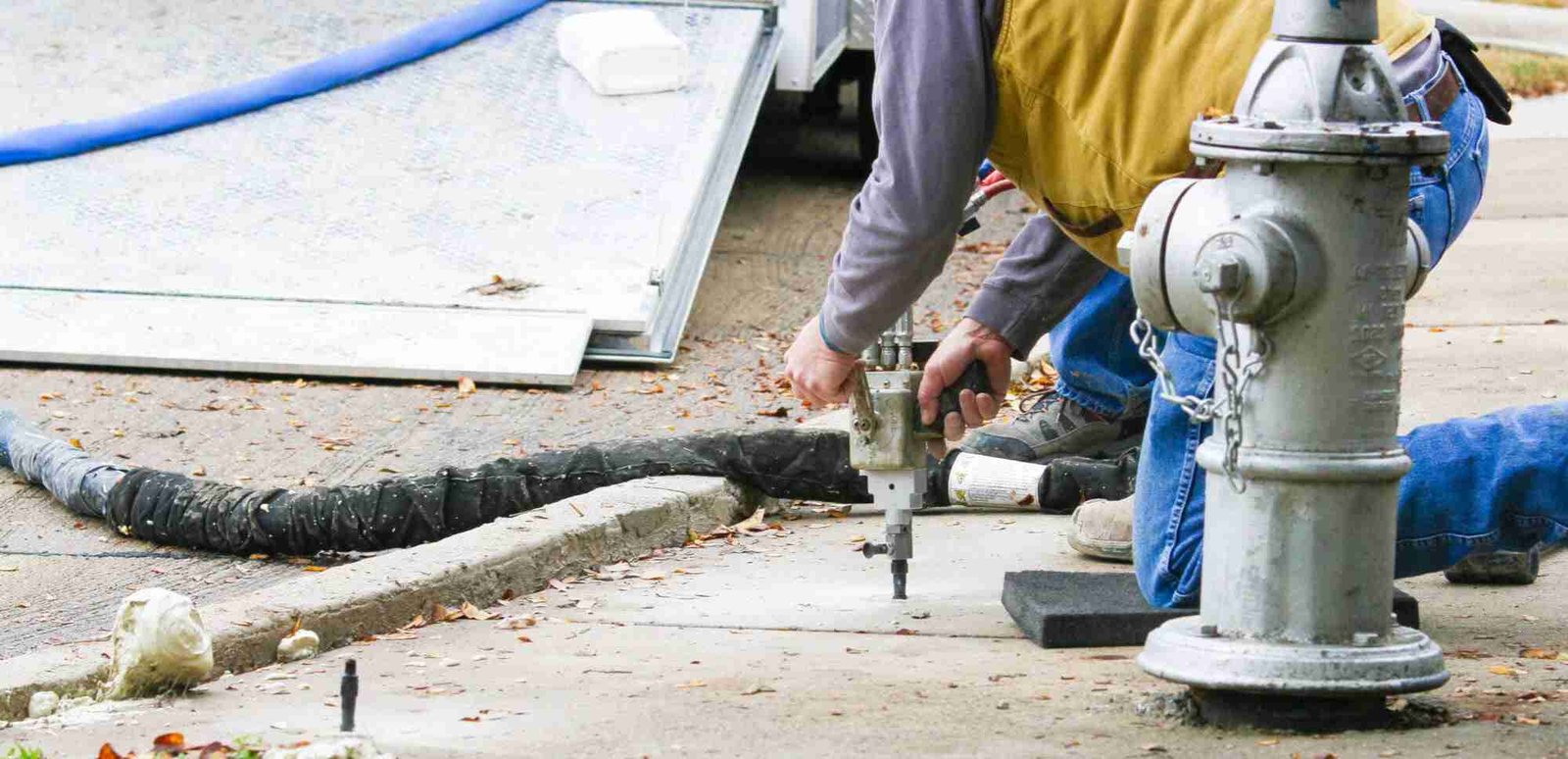
Once the plan is established, the crew drills small, penny-sized holes (typically around 5/8 inch in diameter) directly through the sunken concrete slab. The number and placement of these holes depend on the size and weight of the driveway section. Unlike older mudjacking methods that required massive holes that scarred the surface, these tiny entry points are discrete and easy to patch neatly afterward, preserving the overall look of your property.
Step 3: Insertion of Injection Ports
After drilling the holes, specialized injection ports are fitted into the openings. These ports act as secure gateways for the delivery equipment, ensuring that the liquid polymer travels precisely where it is needed without leaking back out onto the surface of the driveway. The nozzle of the delivery system locks tightly into these ports, creating a sealed environment for the expansion process.
Step 4: Injecting the Expanding Polymer
Liquid polyurethane is injected beneath the slab through the ports. Once introduced into the void, the two-part liquid components react, expanding rapidly as a structural foam. This expansion fills every crevice, cracks, and cavity in the sub-base, compacting loose soil and building a dense, water-resistant foundation. As the foam expands, it exerts controlled, immense vertical pressure, gently and uniformly lifting the heavy concrete slab back to its original grade.
Step 5: Precision Monitoring and Fine-Tuning
Precision is critical during the lift. Technicians monitor the movement of the concrete in real time using laser levels or visual checks against adjacent structures (such as a garage floor or brick pillar). The expansion of the foam is so controllable that slabs can be raised by fractions of an inch until they are perfectly flush. Once the target height is reached, the injection stops immediately.
Step 6: Patching and Cleanup
The final step involves removing the injection equipment, plugging the small holes with a durable, color-matched concrete patch material, and cleaning the work area. Because the polyurethane foam cures and achieves its full compressive strength in just 15 minutes, your driveway is ready for foot traffic almost instantly and can usually handle heavy vehicle weight within hours.
Beyond Driveways: Comprehensive Property Leveling
While sunken driveways are a primary concern, shifting soil can impact other concrete features around your home or commercial building. For instance, pool surrounds frequently settle, creating tripping hazards and drainage issues that demand immediate professional Concrete Pool Deck Leveling & Raising to keep swimmers safe and prevent water from pooling near the pool shell.
Property owners in locations like Ennis, TX, Fort Worth, TX, and Royse City, TX benefit immensely from this quick turnaround time. Whether you are dealing with a rocking sidewalk, a dipping patio, or an uneven commercial loading dock in the greater Dallas Fort Worth area, TX, foam injection provides a permanent fix that costs a fraction of replacement.
Why Polyurethane Foam Outperforms Traditional Mudjacking
Property owners often ask how modern polymer injections compare to traditional mudjacking or slurry pumping. The advantages are clear and dramatic:
- Lightweight Material: Traditional mud slurries weigh roughly 100 to 120 pounds per cubic foot, adding immense dead weight to already weak soil. Polyurethane foam weighs only about 2 to 4 pounds per cubic foot, meaning it lifts the concrete without contributing to further settlement.
- Tiny Drill Holes: Mudjacking requires holes the size of a half-dollar or larger. Foam injection holes are dime-sized and virtually invisible after patching.
- Speed of Cure: Traditional mud mixtures can take days to cure and dry. Polyfoam cures in minutes, minimizing downtime for your driveway or commercial facility.
- Moisture Resistance: The closed-cell polymer foam does not absorb water, wash out, or degrade over time, ensuring long-term stability against heavy rain and expansive clay shifts.
Protect Your Investment Today
Ignoring a sunken concrete driveway will not make the problem go away; water will continue to pool, foundation edges can become compromised, and the trip hazard will only grow worse. Choosing polyurethane foam injection is a smart investment that restores structural integrity, boosts curb appeal, and protects your property value without the nightmare of a messy demolition project.
If you are ready to fix your uneven pavement, turn to the trusted local experts. FoamWorks Concrete Leveling Dallas provides industry-leading results throughout the region. Contact FoamWorks Concrete Leveling Dallas today at our main office or reach out online to schedule your professional concrete evaluation and get your driveway back on solid ground.

Recent Comments